Michel de Montaigne Quotes
We took advantage of [the Indians'] ignorance and inexperience to incline them the more easily toward treachery, lewdness, avarice, and every sort of inhumanity and cruelty, after the example and pattern of our ways.
Montaigne, Michel de. The Complete Essays of Montaigne. Translated by Donald M. Frame, Stanford University Press, 1958, p. 695.


He goes on to observe that the German’s are the most hated of the Europeans in large part because they mainly trade in rotgut liquor much of it poisoned which has a devastating effect on the Africans. (The English, in contrast had to have all alcohol inspected in London for safety, before it could leave for Africa.) The “kings” to which the Bishop referred are the rural tribal kings of whom there were more than a few. It is not as if there were a unified monarchy. Another interesting observation is that although Turner was one of Americas leading Blacks, he used the term frequently, but never capitalized it.

The Spaniardes have executed most outragious and more then Turkishe cruelties in all the west Indies
He was one of the strongest English advocates of colonization of the New World. At that time this was as strong an epithet of cruelty as could be made by Europeans. It was an accurate assessment.


The quotation is self explanatory except for the “curriculum” and “manliness.” The curriculum refers to the Saudi Arabian fundamentalist Wahabi educational curriculum that has been sent all over the world, including the U. S. These tech hatred and violence. America and most non Islamic countries have put great pressure on Islamic groups not to use these extremist materials. To Kharabshe, this in itself is a sin because he sees this curriculum as the authentic and proper one. See {606337} for an example of the violence in the curriculum. He and many like him believe that the attempts by Western nations to provide any rights for women beyond what they have under the Koran diminishes the manliness of Islamic men who would become the victim of these females who would not be under proper control of the men.
He was finally brought to justice after being protected by the right wing for many years. He was sentenced to 25 years in prison. See related quote.

Many are surprised that the first Mexican revolutionary leaders were Catholic Priests, because the Catholic Church was always on the side of Spain and against Mexican revolutionary efforts. The church and the state were totally intertwined at the time, so the Church officials supported the government officials and vica verca. However, there were priests who saw the injustice and corruption of the colonial Spanish government, and not only sided with the revolutionists but became revolutionary leaders. These were opposed and usually excommunicated by the Church establishment authorities.


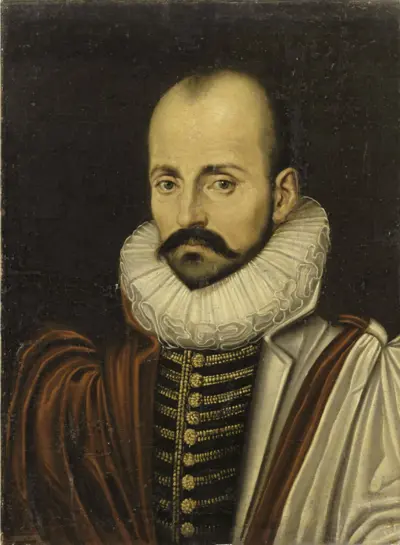
Michel Eyquem de Montaigne, also known as Lord of Montaigne, was one of the most significant philosophers of the French Renaissance, known for popularizing the essay as a literary genre. His work is noted for its merging of casual anecdotes and autobiography with intellectual insight. His massive volume Essais contains some of the most influential essays ever written.
