Cornel West Quotes
We shouldn’t be surprised when Presidents lie. Presidents lie very often.
Cornel West, Philosopher, Interview, PBS The Tavis Smiley Show, March 9, 2004
Sourced by: Eigen's Political and Historical Quotations


Alsop, a political hawk was convinced, as many other right wingers were at the time that the Russians had forged ahead of us in offensive missiles. When he asked President Eisenhower, the President never denied it, but never went to Congress to ask for more money to close the “missile gap”. Alsop made this shocking accusation which offended many Americans, but pleased the ultra-hawks and anti-communists. Most of the nation however then believed that there was a missile gap, with varying explanations of Eisenhower’s silence on the matter. Two years later John F. Kennedy, used the “missile gap” when running in 1960 against Nixon by attacking Nixon and Eisenhower for allowing us to fall behind the Russians at have a missile gap. When Kennedy became President, he was very surprised that there was no missile gap favoring the Russians—it was favoring the United States. Eisenhower did not want the Russians to know that he knew exactly what they were producing and deploying in missiles through great espionage sources. By not saying anything in the face of the accusations, the Russians assumed that the Americans really thought that they had more capacity than they did. And Eisenhower wanted that so that they would be secure that the United States had no real knowledge of their missile capacity. If Eisenhower had actually told the nation that the Russians were really behind us, the Russians would suspect a security leak and our sources could be compromised.


If a government can classify embarrassing information, then it does not have to lie which is why over-classification is so prevalent. But then the officials have to lie in the classification process by claiming national security is involved as opposed to their own or their party’s security from embarrassment. Most officials prefer to tell the truth and not deceive the public. However, a large proportion have their moral instincts compromised by confusing the national interest with the politicians’ interest


He was referring to the tendency of Arab diplomats and leaders to privately assure U. S. leaders about issues and then go home and make speeches in Arabic completely different from their private assurances and commitments. He advocated ignoring all private statements by Arabs and paying attention only to what they say in their own country and in Arabic. For a good example of an Arab politician doing this, see {585490}.

President George W. Bush, to justify the invasion of Iraq had told the public that the Iraqi regime was developing nuclear weapons and other weapons of mass destruction, and had participated in the September 11 attack on the United States by assisting Al Qaeda. It turned out that these statements were false. The administration claimed that their error was well intentioned and the result of faulty intelligence. Opponents claimed that the administration officials knew that they were exaggerating and had pressured the intelligence agencies to create intelligence conclusions that supported their story.


See {618460} for the kinds of statements that stimulated this type of political attack.
While there are dramatic exceptions such as during the Nixon and George W. Bush administrations, compared to most other nations were the indicator of official lying is a leader’s lips moving, the United States is among the leading nations with respect to official deception of the citizens.


Cicely Isabel Fairfield

Nixon however turned out to be very dishonest with the Watergate scandal allowing the public to see and hear what Nixon was really like. He was the only American President who resigned, as he did that to save himself from being impeached and tried for various fenonies he committed. Vidal had his number. However, Nixon was not a crook in the usual sense of the word. His violations of law and ethics did not enrich him fiscally. His corruption was the drive and mania for power and control.
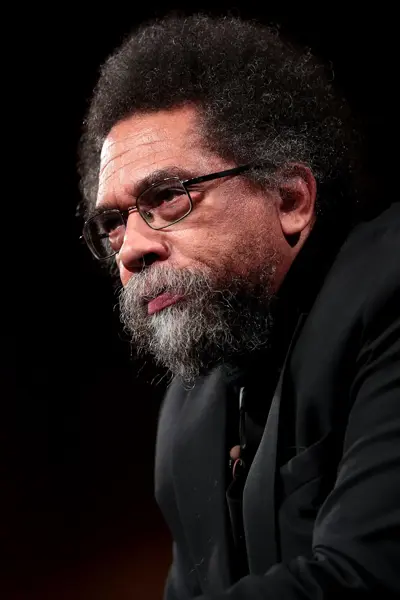
Cornel Ronald West is an American philosopher, political activist, social critic, and public intellectual. The grandson of a Baptist minister, West focuses on the role of race, gender, and class in American society and the means by which people act and react to their "radical conditionedness." A radical democrat and socialist, West draws intellectual contributions from multiple traditions, including Christianity, the black church, Marxism, neopragmatism, and transcendentalism. Among his most influential books are Race Matters (1994) and Democracy Matters (2004).
