Carl Jung Quotes
We shall probably get nearest to the truth if we think of the conscious and personal psyche as resting upon the broad basis of an inherited and universal psychic disposition which is as such unconscious, and that our personal psyche bears the same relation to the collective psyche as the individual to society.
Jung, C. G. Two Essays on Analytical Psychology. Translated by R. F. C. Hull, Princeton University Press, 1966, p. 148.


Blight was referring to one classic example where the myth developed in the South and spread to the rest of the country, that the Civil war motivation was not to maintain slavery but a noble fight for freedom and states rights. Nothing could be further from the truth. Most of the seceding states had a legislative declaration of secession and all of them stated maintaining slavery was the cause of the war and secession. None mentioned a general principle of states’ rights. As a matter of fact the State’s rights issue went the other way. It was the Northern states that refused to obey the Dred Scott decision of the Supreme Court to return fugitive slaves. The Northern states claimed State’s rights and the South responded that states had no right to nullify a Federal Law that had been upheld as constitutional by the Supreme Court. The historical myths that nations create, puts a more acceptable veneer on disreputable behavior of the past. The United States does this but other nations do as well, and some of the myths cause conflict and violence hundreds of years later as with the Balkans where each ethnic subgroup has its own myths all of which are wrong but believed.


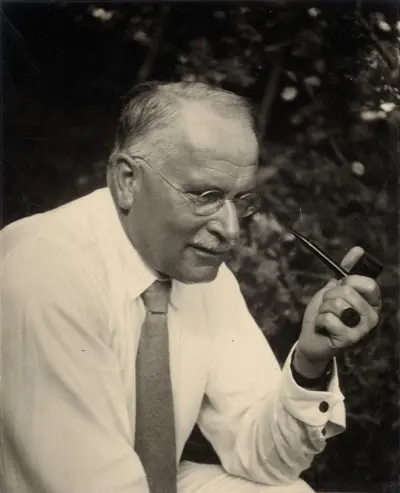
Carl Gustav Jung, was a Swiss psychiatrist and psychoanalyst who founded analytical psychology. Jung's work has been influential in the fields of psychiatry, anthropology, archaeology, literature, philosophy and religious studies. Jung worked as a research scientist at the famous Burghölzli hospital, under Eugen Bleuler. During this time, he came to the attention of Sigmund Freud, the founder of psychoanalysis. The two men conducted a lengthy correspondence and collaborated, for a while, on a joint vision of human psychology.
