John Sherman Cooper Quotes
We provided complete protection to witnesses - right of attorney, right of record, right to cross-examine, and open hearing if they desired. Only Mr. Lane asked for an open hearing.
United States, Congress, House, Select Committee on Assassinations. Investigation of the Assassination of President John F. Kennedy: Hearings Before the Select Committee on Assassinations of the U.S. House of Representatives, Ninety-Fifth Congress, Second Session. Vol. 3, U.S. Government Printing Office, 1979.


Americans are divided as to whether this should be encouraged and helped or not.

This is the classic argument given by those who would deny a defendant the Constitutional protection against self-incrimination. The belief that an innocent man has nothing to fear from the police is refuted by the many cases of innocent men being convicted by evidence they have given in the belief that they were innocent, and served long jail sentences only to later be proved by DNA evidence that they could not possibly have been guilty. Since Nott’s day, society has not only found many cases where honest error was made by the police or prosecutors, but many where there was venal prosecutorial misconduct and defendants were jailed even though the authorities were aware of evidence of innocence and kept it secret. There have been a number of these cases where a defendant was on death row and about to be executed when it was found he was innocent. Probably there have been men wrongly executed. See {629444} for a probable example.


Reaction to the indictments of several of his political associates who were subsequently convicted after this statement:


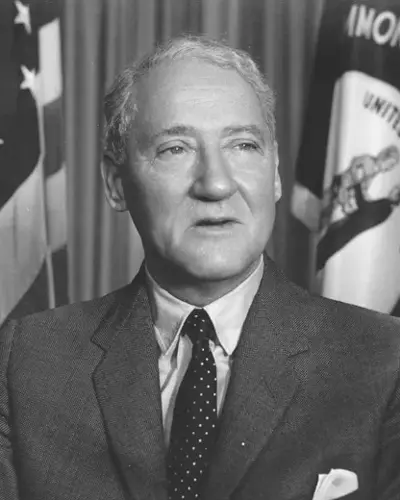
John Sherman Cooper was an American politician, jurist, and diplomat from the Commonwealth of Kentucky. He served three non-consecutive, partial terms in the United States Senate before being elected to two full terms in 1960 and 1966. He also served as U.S. Ambassador to India from 1955 to 1956 and U.S. Ambassador to East Germany from 1974 to 1976. He was the first Republican to be popularly elected to more than one term as a senator from Kentucky and, in both 1960 and 1966, he set records for the largest victory margin for a Kentucky senatorial candidate from either party.
