John C. Calhoun Quotes
We make a great mistake in supposing all people are capable of self-government.
Calhoun, John C. "Speech on the Oregon Bill." The Works of John C. Calhoun, edited by Richard K. Crallé, vol. 4, D. Appleton and Company, 1854, p. 511.


There are some who have argued that the United States 20th century of world dominance was an empire. Perhaps so, but it did not have most of the characteristics that Thucydides and most others thought of as characteristics of empire—occupation of nations, rule by the Imperial country, privilege in other nations of the Empire, control. Most important, in historical empires, money—in the form of taxes or goods was commandeered by the Empire for the mother country. The US taxed no one, and money flowed the other way in the most generous sharing of foreign aid in human history. The United States had great influence and was able to exert economic and sometimes military pressure on many nations of the world; American culture was adopted by many nations, but America rarely behaved as Empires historically did.


Traditional political jurisdictional boundaries were geographic, but in one of the wisest decisions of English Colonial government, it was recognized that dealing with the Indians demanded a much different approach than the classic European extension of the Crown by appointing a Governor for a territory. As Superintendent of Indian Affairs, Johnson, had authority and responsibility for the Indians and relations with the Indians in Massachusetts and the other colonies, the Colonial Governor not withstanding. Bernard and the other Governors of course did not care for Johnson’s authority within his territory.

Many of the early democracies had failed when in crises the citizens turned to a strong leader who soon became a monarch. The early democracies did not have the mature democratic institutions that we now know are so important for the success of a democracy.

Actually the Iroquois had a very sophisticated system of regular laws and government some of which was incorporated into our Constitution. However, the Iroquois sided with the British in the American Revolution and at its conclusion, most were driven out of their New York lands and became refugees in British Canada. So by 1816, the Iroquois, the most sophisticated, powerful and affluent of all the American Indian tribes were no longer consequential in America.


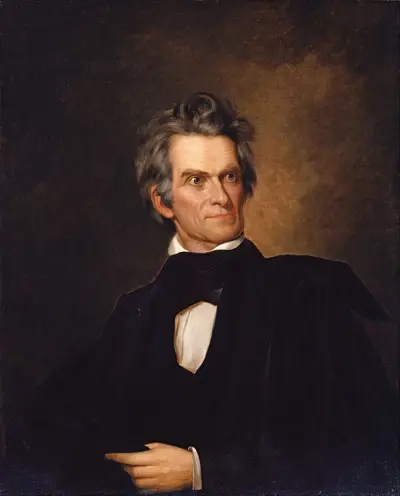
John Caldwell Calhoun was an American politician and political theorist from South Carolina who held many important positions including being the seventh vice president of the United States from 1825 to 1832, while adamantly defending slavery and protecting the interests of the white South when its residents were outnumbered by Northerners. He began his political career as a nationalist, modernizer, and proponent of a strong national government and protective tariffs. In the late 1820s, his views changed radically, and he became a leading proponent of states' rights, limited government, nullification, and opposition to high tariffs. He saw Northern acceptance of those policies as a condition of the South remaining in the Union. His beliefs and warnings heavily influenced the South's secession from the Union in 1860–1861.
