Barbara Jordan Quotes
We honor cultural identity, but separatism is not allowed.
Barbara Jordan, 1936-1996, U. S. Congresswoman (Democrat, TX), Keynote address, Democratic National Convention, New York, July 13, 1992
Sourced by: Eigen's Political and Historical Quotations


Penn observed the fact that most American social relationships are not multicultural in that Blacks in a restaurant tend to eat with other Blacks, whites and Hispanics the same. While America has a multicultural and diverse work environment and use of public services, it is still rare to see very integrated churches, social clubs, parties and other social activities. While Penn’s observation is correct, the trend is towards much more socialization on racial, religious, cultural, and geographical basis. There is much more intermarriage than in the past and with integrated families, many of the other social pluralism will follow. It was once thought that intermarriage would be the last barrier to fall and would follow from school, church, and other social integration. However, it appears that it is the other way around.


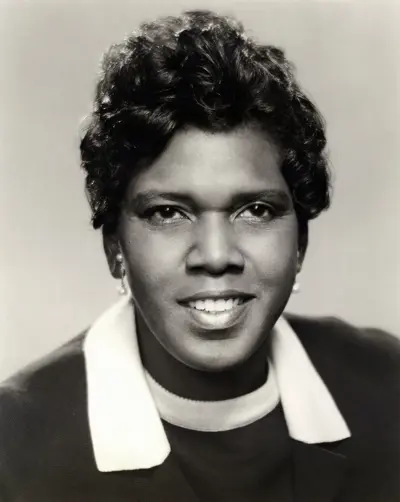
Barbara Charline Jordan was an American lawyer, educator and politician who was a leader in the Civil Rights Movement. A Democrat, she was the first African American elected to the Texas Senate after Reconstruction and the first Southern African-American woman elected to the United States House of Representatives. She was best known for her eloquent opening statement at the House Judiciary Committee hearings during the impeachment process against Richard Nixon, and as the first African-American as well as the first woman to deliver a keynote address at the 1976 Democratic National Convention. She received the Presidential Medal of Freedom, among numerous other honors. She was a member of the Peabody Awards Board of Jurors from 1978 to 1980. She was the first African-American woman to be buried in the Texas State Cemetery. Jordan's work as chair of the U.S. Commission on Immigration Reform, which recommended reducing legal immigration by about one-third, is frequently cited by American immigration restrictionists.
