Charles Kingsley Quotes
We have used the Bible as if it were a mere special constable's handbook, an opium dose for keeping beasts of burden patient while they are overloaded.
This is a very important quotation as Kingsley was a precursor of Karl Marx in claiming that religion was used as opium for suppression of people. See Marx {624064} It is probable that Marx had read Kingsley’s quotation but there is no way of knowing for sure. What is certain is that Marx did not originate the idea.
Charles Kingsley, 1819-1875, English Protestant Clergyman, Second letter to the Chartists published in Politics for the People, May 27, 1848
Sourced by: Eigen's Political and Historical Quotations

Although this is one of Marx’s more famous quotations, he had Napoleon Bonaparte {39959} to thank for the concept of the use of religion as a political tool. A Napoleon contemporary Chartist, Charles Kingsley, {441604} in 1848 also made the analogy between religion and opium for political control.


Einstein and his wife gave this bible to an American friend, Harriett Hamilton. In 2013, the Bible sold at auction for $68,500.


Priests at the time were mostly uneducated. They would tend to make up their own Biblical stories that the people would prefer rather than the official church versions. The bishops wanted this practice stopped.


The Creation Museum makes the Christian Fundamentalist Case for their alternative view of the creation of the earth and man. In the process, they make claims that are proven incorrect every day in science, like the earth is only about 6000 years old {641849} , and all the species on earth were then separately created in their immutable form with no evolutionary process. There are many deeply religious Christians who do not take the Bible literally and have no problem with evolution as the mechanism which God selected to create and develop life. The Roman Catholic Church, for example, does not maintain that the Bible is literally true and Evolution did not account for the development of life on earth. The major difference between most modern scientists, philosophers, and theologians, is that some believe that God of other Supreme Being had nothing to do with the evolution and development of life forms and those who believe that Evolution was the mechanism that God created and used. See {641848} for an example of the former.


This quotation illustrates that in the late 19th Century, there were still very prominent American scientists who were Biblical Literalists as well—a virtual intellectual impossibility. Dana was a Yale professor, and yet he rejected Evolution and had the age of the rocks he studied all wrong. At the time, America had only 1 great world class scientist (Physicist Albert A. Michelson) and American Science really became great in the 20th century. Dana was not a total incompetent however. He had amassed vast descriptive knowledge of California and other areas and was at the time considered America’s preeminent Geologist despite his lack of understanding of many fundamental aspects of his own science which was understood by many English and European scientists.


Al-Maarri’s quotations are not only meaningful in their own right, but they illustrate the openness and free thinking that was allowed in the early days of Islam before about 1100. If anyone wrote such things today in most Islamic countries he would at least be jailed if not executed for blasphemy. And if any Christian in Europe made the same statement, he would have been excommunicated at least if not tortured and murdered.

Franklin was a deist. He believed in God and the Creation but not the Bible which is often referred to as “revealed” truth. He did believe that classic Christianity was a positive force as some people were led to good works and a moral life by it.


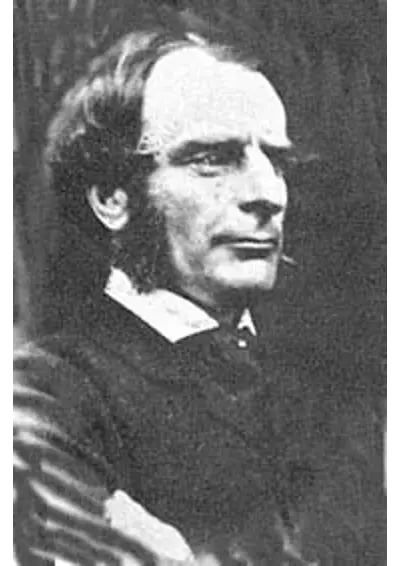
- Born: June 12, 1819
- Died: January 23, 1875
- Nationality: English
- Profession: Clergyman, Historian, Novelist
Charles Kingsley was a broad church priest of the Church of England, a university professor, social reformer, historian, novelist and poet. He is particularly associated with Christian socialism, the working men's college, and forming labour cooperatives, which failed, but encouraged later working reforms. He was a friend and correspondent of Charles Darwin.
