Antonio Perez Quotes
We have more patents on pigmented inks than anybody else.
Reardon, Marguerite. "Kodak Takes on HP in Consumer Printers." CNET, 15 Feb. 2007.


This principle justified the Government in allowing a local Indonesian company to manufacture anti-AIDS drugs without paying licensing rates demanded by the drug companies that held the patents. The principle is that patent rights and the desire to profit should not supersede the rights of people to continue to live because they cannot afford the drugs to keep them alive. The local manufacturers provide the drugs to the government at cost of manufacture which is a tiny proportion of the price the patent owner charges.


What is ironic about this fact is that 1000 years ago, the Muslim Middle East was scientifically and mathematically far in advance of Europe. However, after about 1100 AD, the Muslim religion began to lose its intellectual tolerance and cultural appreciation for science and innovation to the point where innovation of any kind was regarded as heresy, and the logic and empiricism that was present in early Islam disappeared, and there has been little scientific innovation and progress in traditional Arab Islamic nations ever since.


This is a very important quotation in the Patent world. One of the major justifications for giving patent monopoly to an inventor is that without the patent protection people would not invest time, effort or money to invent things. However many of the great inventors have not agreed. The original Constitutional purpose in granting patents was to stimulate disclosure of technology to other inventors and educate the nation. That is why all patents are public and can be viewed by all.

This would seem a much easier solution to the problem of monopoly holders charging outrageous prices than trying to fix profits or lay a large tax on the profits. However, few governments ever do this. In many cases the patent holders control or heavily influence the government. There is in addition, in most Judeo-Christian societies an assumption that most people have a moral sense and will not take undue advantage of customers just because they have the power to do so. And in the most egregious cases of monopoly pricing there were many other patents where the inventors were not gouging the consumers. It is always been the minority of businesses that have taken gross advantage of patent monopolies. However at some periods, where there was an oligarchy, all the companies in an area abused their patent monopolies together. An example would be the pharmaceutical industry of the early 21st century.
The day that most changed the course of history was

1st Baron Macaulay. The speech was in opposition to the extension of copyright to 60 years after the death of the author. The American Congress in the Digital Millennium Copyright Act did not take his advice and extended the time to 100 years. This was a radical change from the practice of our Founding Fathers who did not allow copyrights at all. America did not join the copyright convention until the 19th century and then for a far shorter period. When corporations started accumulating intellectual property, they made political contributions and hired lobbyists to increase the period of “evil” so they made windfall profits that were not expected.


Many people believe that patents—especially in the high technology arena—actually inhibit innovation.

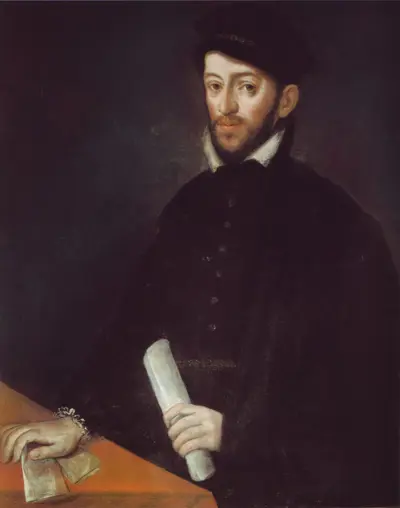
Antonio Pérez (1534–1611) was a Spanish statesman, secretary of king Philip II of Spain.
