Ian Smith Quotes
We had the highest standard of health and education and housing for our black people than any other country on the African continent. That was what Rhodesians did. I wonder if we shouldn't be given credit for doing that.
Ian Smith, 1919–2007, Prime Minister of Rhodesia, Quoted in BBC News Obituary of Ian Smith, November 20, 2007
Sourced by: Eigen's Political and Historical Quotations


The editor at the time was Dr. William H. Boyle but no one is sure whether he, the owner, or someone else, wrote the editorial. The quotation illustrated a fascinating twist of logic that was very commonly held at the time. “If God created men of different colors, he must have meant them to be separate.” It is fascinating that virtually no one at the time made a similar argument about hair or eye color, intellect or other differential traits of people. Although this logical fallacy waned in the latter part of the 20th century, there are some who still hold to it.

Eight years and a Civil War later, he had changed his mind and was the sponsor of the Civil Rights Act of 1866—the first Federal civil rights law in America. See {587711}.

The Freedmen’s Bureau was an institution established after the Civil War to provide assistance to the newly emancipated and free slaves. Every constructive step taken by the Bureau was opposed and obstructed by “unreconstructed” Southerners and some Northerners. They had very limited resources and there was little known technically about how to accomplish their mission. However, tens of thousands of individual new freed Negroes profited immensely and there were some systemic successes such as Du Bois describes in this quotation. There were also some failures he believed—See Quotation 643645.

Following the lead of Arkansas, many southern schools were closed by order of the Governor when they received a court order to desegregate. Southern education was the poorest in the nation and the Southern students not able to go to school made the situation worse. Governor Almond changing his position realized that the cost of defying the Constitution and the courts was the ignorance of the students of the state, and became a major force persuading the state to integrate their schools. He is remembered for his leadership of desegregation and most people have forgotten that at the beginning of his term as governor he was as bad as most of the other Southern segregationist politicians.
Some whites opposed Slavery and new slave states, not becasue of any sympathy with Negroes or concern for the immorality of slavery, but becasue slavery made it difficult for the working white man to thrive.
Some whites opposed Slavery and new slave states, not becasue of any sympathy with Negroes or concern for the immorality of slavery, but becasue slavery made it difficult for the working white man to thrive.

Dr. Ambrose was the senior Black education official in the country. Note his title which was given to him by President Franklin Delano Roosevelt.

Jessie Helms was his young assistant who drafted this race baiting ad. There are two vicious but subtle aspects to this kind of attach ads. First, not that the ad does not address the problem of white men working along side of blacks. It only refers to wives and daughter. This interracial sex innuendo played on and increased the fear of whites that Blacks would commonly rape white women. The second nasty aspect of the ad is the specific attack on the opponent. Instead of saying that he favored desegregation, the phrase “mingling of the races” was used which implied that Graham was in favor of biracial intermarriage and children—again another sex innuendo. When integration of the workforce finally occurred in the South, there was no increase in Black men sexually assaulting white women. There has been a substantial increase in racial intermarriage however as racial bigotry has diminished in America.

This quotation shows two important historical facts about Southern Racism. The first is now great the social pressures were against any white who would try and alter the status quo. The second was that none the less there have always been whites in the South who, despite the great social penalties, did the right thing and not only improved the situation, but more important, made most Americans realize that Southerners were not all racists any more than all of any group had any negative behavior.

Charleston was in the Southern part of the state where most people supported slavery. Douglas made an unequivocal pitch for the racist vote {600060} and forced Lincoln to take a stand. Like many politicians today, Lincoln decided to give the audience what they wanted to hear. It is not clear whether or not he ever believed this statement or was just pandering in a political campaign. He had never said this in the Northern part of the state of before. Lincoln’s views on race changed and matured over the years, culminating in the Emancipation Proclamation. Lincoln lost the Senate seat to Douglas.

At the time segregation was legal, Southern Blacks could not vote, racism was rampant, and a Black President seemed impossible.

The Boers were lower class, uneducated, farmers from Holland who came to South Africa before the English did. They were at the bottom of the Dutch socioeconomic ladder. Unlike the English who were interest in establishing a trading colony, the Boers just wanted to own and farm the land and use blacks as slave or cheap labor. The Dutch Government and Trading companies lost interest in South Africa as there were much more profitable parts of the world, and they felt no obligation to the Boers whom they were glad to be rid of. So the Boers found themselves having to follow the British laws and rules of the British Colonial Office. Slavery was outlawed, and Blacks could be educated and become citizens under British law. They could own land, and contest the right of the Boers who had settled in some uninhabited land and some that was owned by Black tribes. The Blacks outnumbered the whites in general and the Boers, and there were educated Blacks who “outclassed” the still relatively uneducated Boers. So the Boers, fighting for their “way of life” set up their own area in Southern Africa and claimed independence. But Blacks claimed that it was their land and looked to the British to exercise English law. The Boer war ensued. Although the Boers lost the war, the bred at a much faster rate than the English, many of whom did not even have their families in South Africa. By the end of WWII, the Boer white majority controlled the government and kept the majority Blacks from voting and having full citizenship rights. They dominated Apartheid South Africa until the Black Revolutionists obtained control and although Black and white relations are better in South Africa than most countries, the extemeist Boers and most militant Blacks are in political, but not violent, conflict. Churchill and the British have always perceived themselves as being caught in the middle between the Boers and the Blacks.


In the early 20th century, Carver and Du Bois were the two most important Negro leaders in America. However, they disagreed over tactics. Carver tended to believe that if the Negro would be educated and trained for meaningful occupations, he would rise in the eyes of the whites and discrimination would diminish. Du Bois was more cynical as can be seen in this quotation as he looked back on history when he was 95 and close to death. He had the advantage at this time of seeing that Washington’s strategy had failed, but he opposed Washington on this from the beginning. Most whites preferred Washington’s view as whites were relived of immediate moral responsibility for racism and the burden was placed on Blacks to train, develop and display themselves as worthy. It was only when very large numbers of Blacks had done this and nothing much changed in terms of civil and economic rights, that it was clear that Washington’ view had been hopelessly naïve.

He was advocating separation of the races.


See {625675}, {625686}, {625684}, {625682}, {625676} for additional quotations arguing for Black emigration.

Blacks were fighting and dying in WWII. They were equal when they were under fire, but otherwise not. The war was against fascist protagonists whose creed was inequality while the allies were upholding freedom and equality. But making that aspiration a reality was difficult.

On the day of the March on Washington the Congress of Racial Equality asked Levitt if he would change his policies on discrimination against Negroes. This quotation, perhaps more than any, other illustrates why legal discrimination was so pernicious. Any builder who tried to break down the housing color barrier would pay an economic penalty and the moral issue became economic. In trying to change America’s attitude on race the people who is the way would then be punished economically. This is why both the black-and-white leadership who wanted desegregation realized that it had to be done by legislation, and not by a process of education and persuasion. In housing a persuaded convert could not act alone without severe penalty. Even after housing discrimination was made illegal, the builders who desegregated suffered somewhat for many years because so many people found ways to evade the law, and government officials at all levels were reluctant to enforce the law.
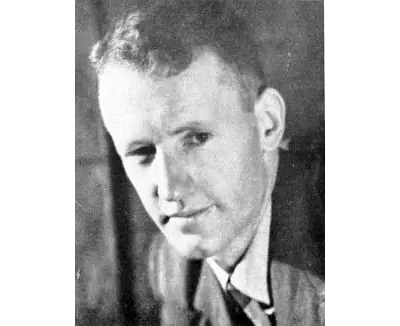
Ian Douglas Smith GCLM ID was a Rhodesian politician, farmer, and fighter pilot who served as Prime Minister of Rhodesia (known as Southern Rhodesia until October 1964 and today known as Zimbabwe) from 1964 to 1979. He was the country's first premier not born abroad, and led the predominantly white government that unilaterally declared independence from the United Kingdom in November 1965, following prolonged dispute over the terms. He remained Prime Minister for almost all of the 14 years of international isolation that followed, and oversaw Rhodesia's security forces during most of the Bush War, which pitted the unrecognised administration against communist-backed black nationalist guerrilla groups. Smith, who has been described as personifying white Rhodesia, remains a highly controversial figure—supporters portray him as a man of integrity and vision "who understood the uncomfortable truths of Africa," while his opponents consider him "an unrepentant racist."
