Sarah Vowell Quotes
We go in to liberate Cuba, but Cuba still isn't free; we don't really think through what we'll do after the initial treaty is signed, but we're still occupying. There's chaos and torture and finally an outcry.
Vowell, Sarah. Assassination Vacation. Simon & Schuster, 2005.

She was referring to the aftermath of the Iraq War.

1st Earl Lloyd-George of Dwyfor. England had occupied Iraq, expecting to be welcomed by the natives, but like the George W. Bush ill-fated invasion almost a century afterward calls for withdrawal were met by the same rationale for maintaining the occupation. The English policy makers like the Bush administration were expecting a more welcoming reaction. See {585250}.


Shortly after he refused to join, his brother who had joined the Resistance had been captured, tortured and murdered by the Germans. He then joined the active resistance even though the Americans had not yet arrived. He realized that resistance was just an annoyance to the Germans, and the time the Resistance could really make a difference was after the Americans and British had landed in France.


This concept of Total War turns out to be the only way to bring many conflicts to an end. Sherman was hated by generations of Southerners because he appeared to be vengeful to humble the Southern pride and spirit. But actually, Sherman was not personally vengeful at all and respected the South and understood its point of view more than most in the North. However, he was one of the first of the Western World’s military leaders to realize that with modern warfare and the then modern weapons, the only way to win a war was to persuade the enemy to stop fighting and if they refused, as the South kept doing, the only rational and humane course was to end the war as swiftly and totally as possible.

A few weeks after the Japanese sneak attack on Pearl Harbor, Japan invaded the Philippines and occupied the country. They thought that because of the original American occupation and some American war crimes in the American Philippines War, the people would welcome Japan, thinking that Japan had freed them from the United States domination. However, by that time, most of the Filipinos had become pro American and despite many posters like this one, the Japanese were hated by almost all of the Filipinos for their atrocities were much worse than the worst of the American army at the turn of the century. The American outrages were committed by a minority of the soldiers and officers while the Japanese atrocities were universal and institutional.

When Britain and America invaded Iraq and toppled the Saddam government, massive looting broke out. Britain and America were criticized by some for not protecting museums, government buildings and other targets of the looters, blaming the coalition for not maintaining law and order. Kilroy-Silk and others disagreed and blamed the looters primarily.


The Russians, who had invaded Afghanistan successfully, then proceeded to lose Afghanistan.

Despite the fact that there were no formal political polls at the time, public opinion was very influential in curtailing what might be a tendency to use of the American military. Starting with the Cold War later, Presidents tended to use American military force regardless of public opinion or would exaggerate or lie (Vietnam and Iraq wars for example) to temporally gain some public support.

The Vice President was one of the architects of and advocates for the Iraq War. To garner public support he (and the others supporting the war) claimed that Iraq had developed weapons of mass destruction and made a serious of predictions about the war. He was wrong on all counts. There were no WMDs, none were even being developed, and we needed hundreds of thousands of troops for a decade as we were not greeted as liberators but the vast majority of our casualties and deaths in Iraq came after the invasion was successful and the population showed very hostile to U. S. occupation and our governing policies.


Buleihi is one of the few Arab intellectuals who are not totally negative about Western colonialism and interference in the affairs of other countries who he believes benefit from the Western influence and have developed such an insularity that they will not be changed or modernized otherwise.
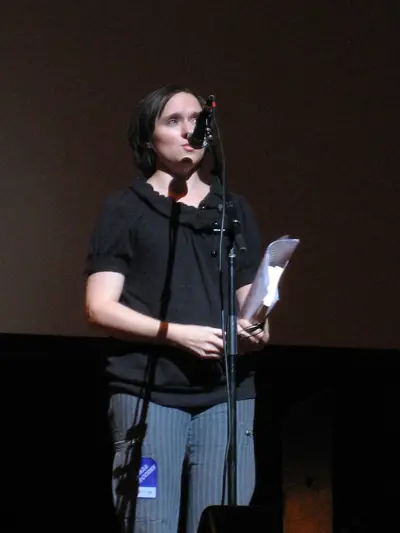
Sarah Vowell is an American author, journalist, essayist, social commentator and actress. She has written seven nonfiction books on American history and culture. She was a contributing editor for the radio program This American Life on Public Radio International from 1996 to 2008, where she produced numerous commentaries and documentaries and toured the country in many of the program's live shows. She was also the voice of Violet Parr in the 2004 animated film The Incredibles and its 2018 sequel.
