Hans-Dietrich Genscher Quotes
We do not stand equally distant from the U.S.A. and the Soviet Union … American troops are in West Germany in order that free trade unions exist and Soviet troops are in Poland to see to it that free trade unions there do not exist. That is the difference.
Hans-Dietrich Genscher, German Foreign Minister, 1981
Sourced by: Eigen's Political and Historical Quotations


This statement from an avowed Marxist illustrates the complexity of the Cold War. Marxists and Communists like Pannekoek felt that there had to be a workers’ movement to overcome the capitalist interest in a nuclear arms race. However, they also believed that Russia had botched communism so badly that there could be no workers’ movement in the Soviet Union because of the repression. Only in America they believed could the impetus for disarmament come.


This quotation illustrates the derogatory and disrespectful attitude that many high level American officials then had towards Arab leaders. No one objected to or reprimanded Symmes for his use of the word “mongrels”. And he was the State Departments leading expert on the Middle East and Arab Cultures. In the photo, Symmes is the gentlemen on the right.


Kennan was one of the few people who saw the possibility of Soviet rule of Eastern Europe crumbling as it did almost 50 years later. Most Americans thought that the Soviet Union was so militarily entrenched that they would never be ousted short of war.

The British suspected that the Turks of Anatolia were complicit with Bolshevism
He was referring to the Early Cold War. The American official position and propaganda called for Russian military and political control of Eastern Europe to end and supported uprising and revolution, but the U. S. did not have the power to dislodge Russia without risking a nuclear war.


At the end of WWII there was much tension between Russia and the Anglo-American alliance. This plan was developed but never implemented. See {613195} for Prime Minister Winston Churchill’s description of the invasion idea.


FDR was right about Russia being a major factor in stopping Hitler, but partially wrong about the danger of Russia. The Soviets never did dominate Europe although the tried, but they did dominate Eastern Europe.
1st Viscountess Snowden. See Winston Churchill regarding the most famous use of the “iron curtain” phrase {411311}. She seems to have been an earlier user. The phrase " iron curtain" was used by T. St. Vincent Wallace Troubridge a few months earlier than Churchill. Also, it appears to have been used earlier than that by Nazi Propaganda Minister Joseph Goebbels in Das Reich {601664}. But George Washington Crile used the phrase in a political context in 1915 {598870}. And Viscountess Snowden used the phrase in her memoirs of a Past WWI trip to Russia {616546}. It is not known whether Troubridge or Churchill were familiar with any of these other works.

The Red Scare had already reached most conservatives and Truman and most others had not yet been affected by the fear of Communism that so many people had through the 1970s.

This was an amazing prediction for the time. Most Europeans were not sure that the United States would even survive, and Russia was looked upon as the most backward nation in Europe. By the middle of the 20th century—over 100 years after Tocqueville wrote this—The United States and Russia were the two superpowers of the world.


Some on the extreme left of the Labor Party at the time were extolling Soviet Russia while denigrating the United States. Crossman, an avid socialist thought that was absurd and said so at every opportunity. The pro Soviet wing of the Labour party got smaller and smaller. He and many others thought that Russian Communism was a very poor implementation of socialist ideas.

Ironically, at the time she wrote this column, Mrs. Roosevelt was being accused of being a communist by some Southerners who associated her strong views against racism and segregation. Some in the North thought she was a communist because of her active role in the New Deal, Yet here she was, willing to use military force to prevent Soviet expansion.
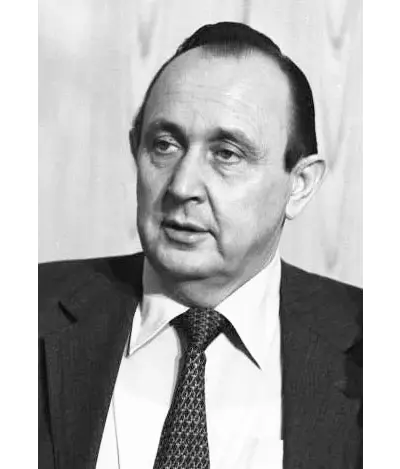
Hans-Dietrich Genscher was a German statesman and a member of the liberal Free Democratic Party (FDP), who served as the Federal Minister of the Interior from 1969 to 1974, and as the Federal Minister of Foreign Affairs and Vice Chancellor of Germany from 1974 to 1992 (except for a two-week break in 1982, after the FDP had left the Third Schmidt cabinet), making him the longest-serving occupant of either post and the only person, holding one of these posts under two different Chancellors of the Federal Republic of Germany. In 1991 he was chairman of the Organization for Security and Co-operation in Europe (OSCE).
