Stephen Vincent Benet Quotes
We cannot afford the creeping paralysis that destroys the effective will of democracy - the paralysis carried by hate and rancor, between class and class, person and person, party and party, as plague is carried through the streets of a town.
Benét, Stephen Vincent. America. Farrar & Rinehart, 1944.

Gingrich was one of the most polarizing political figures of his era. He conflated liberals with intellectuals, and people he called “elites” creating a form of class warfare where the class divisions were educational and cultural instead of socioeconomic.

This quotation is classic as it was the first of a series of attacks that have been made on presidents and other politicians by the economic ultra-rightists when the conservatives had disliked the politician’s economic policies. To criticize the ultra-rich and their corporations was promoting class warfare. And that criticism being made public certainly upset the confidence of the rich in the President. When the president pointed out how the average person feels about the rich, to them it was he who was responsible for the mistrust and hatred by talking about them—not them by what they were doing. This same attack has been made against every Democratic President that came thereafter, but it was first used against Republican Theodore Roosevelt. For many Liberals, the way they know that they are starting to succeed with economic reform is when they get attacked for fomenting class warfare.


The immediate election in question was the first democratic election in Iraq where the existing divisions among the Suni, the Shiites and the Kurds may have increased if one got a significant upper hand. In America the 2000 and 2004 elections were also very divisive.

This was his most famous speech.


The Senate was in the midst of a particular bitter debate. The chaplain offered the following prayer.

After Roosevelt, most eras of American politics more or less followed the pattern Roosevelt described herein as a “calamity”, with the anger becoming more or less intense. Jefferson thought that these were natural divisions of politics in all societies--{604810}. The thing that masked this for years was race and slavery. In Lincoln’s time there were liberals and conservatives in both parties if race were ignored. In Theodore Roosevelt’s era, he, Taft and others were generally liberal reformers, while a large number of Republicans were conservative supporters of the status quo. Some democrats were radical reformers like William Jennings Bryan while others were arch conservatives. Until 1964 and the Civil Rights Act there were many conservatives in the Democratic Party, but almost all switched to the Republican Party in anger. The Republican conservatives tended to drive the Republican liberals out of the party and for the last part of the 20th century Roosevelt’s “calamity” well described the American political scene, and the anger increased carrying partisan bitterness into the 21st century.


35 years earlier Vice President Hubert Humphrey used the same phrase to describe Republican attacks.


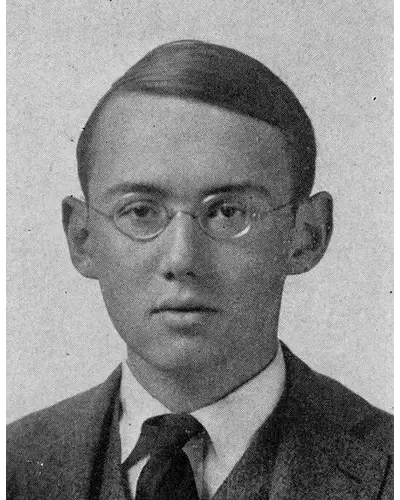
Stephen Vincent Benét was an American poet, short story writer, and novelist. Benét is best known for his book-length narrative poem of the American Civil War, John Brown's Body (1928), for which he won a Pulitzer Prize in 1929, and for two short stories, "The Devil and Daniel Webster" (1936) and "By the Waters of Babylon" (1937). In 2009, The Library of America selected Benét’s story "The King of the Cats" (1929) for inclusion in its two-century retrospective of American Fantastic Tales.
