Michael Rosbash Quotes
We benefited from an enlightened post-war period in the United States: Our National Institutes of Health have enthusiastically and generously supported basic research.
Rosbash, Michael. "Nobel Banquet Speech." Nobel Prize Banquet, 10 Dec. 2017, Stockholm City Hall, Stockholm. NobelPrize.org, Nobel Media AB, 2017.


Almost all former colonial nations resent the colonialism and tend to overlook some of the benefits. Like European colonialism, the Ottoman Empire brought many benefits and advancements to their subject peoples but the oppression is what is most remembered by future generations. Despite the terrible history of the Ottoman Empire in the Armenian Genocide and some other massacres, the Ottoman Empire had more than a 500 year influence on a great part of the world�Islamic and Christian – much of which was very valuable to the world even today.

Stem cells are cells of the body that transform into all other cells as needed. Embryonic stem cells are the ones most easily transformed to create other needed cells. There was and is a large supply of embryonic stem cells but religious abortion opponents were concerned that if there were enough success there would be a market for fetal stem cells which would encourage some women to have abortions so that they could sell the embryonic stem cells. President Bush, to placate his religious right wing, had banned federal funds being used for fetal stem cell research. President Obama, who had campaigned on this issue and been elected, then overturned the ban with this quote.


He was right about the pace of technological development, but we have yet to realize his prediction of inexhaustible power.
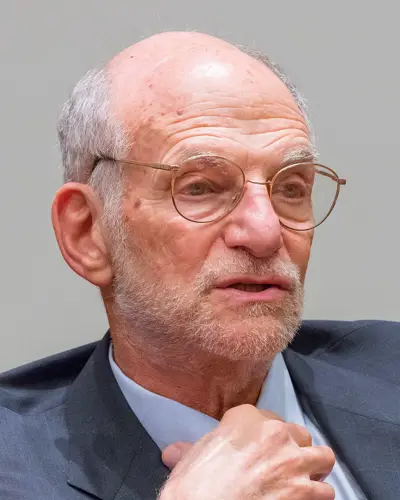
Michael Morris Rosbash is an American geneticist and chronobiologist. Rosbash is a professor and researcher at Brandeis University and investigator at the Howard Hughes Medical Institute. Rosbash's research group cloned the Drosophila period gene in 1984 and proposed the Transcription Translation Negative Feedback Loop for circadian clocks in 1990. In 1998, they discovered the cycle gene, clock gene, and cryptochrome photoreceptor in Drosophila through the use of forward genetics, by first identifying the phenotype of a mutant and then determining the genetics behind the mutation. Rosbash was elected to the National Academy of Sciences in 2003. Along with Michael W. Young and Jeffrey C. Hall, he was awarded the 2017 Nobel Prize in Physiology or Medicine "for their discoveries of molecular mechanisms controlling the circadian rhythm".
