Robert Falcon Scott Quotes
We are showing that Englishmen can still die with a bold spirit, fighting it out to the end.
Scott, Robert Falcon. Scott's Last Expedition. Vol. 1, Smith, Elder & Co., 1913.

Scipio Africanus Major


For a man of God, Davies was a military hawk of his day. See {599233} .

The America First Committee consisted of right wing Americans who admired the fascist states of Nazi Germany and Italy. They were very anti-English and wanted the USA to have an alliance with Hitler against England and above all to not support England in the Second World War. Once Hitler declared war on the United States, the absurdity and danger of the American First groups became clear. A few changed their minds, but most remained ultra right wing fascists. They were a public group and under surveillance by the FBI so they never participated in any sabotage or successful spying for the enemy. Ironically, the organization with the most patriotic sounding name was so disloyal and in support of those who warred on America. Great Britain had an equivalent organization arguing for England to support Germany and let Hitler control Europe.


The Shakers were an American religion and pacifists Lincoln learned. He was so impressed with their sincerity and way of life that he exempted Shaker men from the draft—the first conscientious objectors formally recognized in America. However, Lincoln made the statement to the Shakers which greatly impressed them and caused much reflection. Quakers had been pacifists also, but until the Civil War Draft there was no mechanism to test.
Reports were widespread that General Grant was an alcoholic and was frequently drunk in the field. Lincoln was under pressure to relieve Grant of his command in the West. To a Pennsylvania politician he explained:


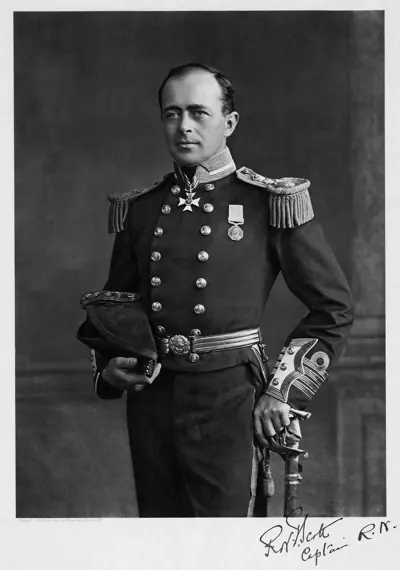
Captain Robert Falcon Scott CVO was a Royal Navy officer and explorer who led two expeditions to the Antarctic regions: the Discovery expedition of 1901–1904 and the ill-fated Terra Nova expedition of 1910–1913. On the first expedition, he set a new southern record by marching to latitude 82°S and discovered the Antarctic Plateau, on which the South Pole is located. On the second venture, Scott led a party of five which reached the South Pole on 17 January 1912, less than five weeks after Amundsen's South Pole expedition.
