Earl Warren Quotes
We are now at the point where we must decide whether we are to honour the concept of a plural society which gains strength through diversity, or whether we are to have bitter fragmentation that will result in perpetual tension and strife.
Warren, Earl. A Republic, If You Can Keep It. Quadrangle Books, 1972.


There are two ethnic groups in Fiji. The indigenous Fijians and immigrants from India and their descendants. The Indians originally came to trade and represent a globalized, mercantile culture whereas the indigenous tribes did not have the tradition of business. Over time, the minority Indians were economically more successful than the majority, which tended to resent the Indians. As the Indians were the political minority with no strong tradition of protection of minority rights, they became victims of discriminatory behavior in a nation where the traditional political structure of tribal chiefs and tribes dominated politics. Religion also separated the Hindu Indians from the Christian tribals. In the early 21st century, an Indian was elected prime minister, but this led to a revolt and coup by some traditional tribals. Finally the coup was put down but the society had been split apart and there was continuous argument over rights and whether the coups plotters should be punished.


This is a variant of the famous Lincoln quotation, {619494}. Houston did not use the word “house” as had Lincoln but surely, as did Lincoln, was familiar with The Book of Mathew {606727}. Houston however gave his speech BEFORE Lincoln.


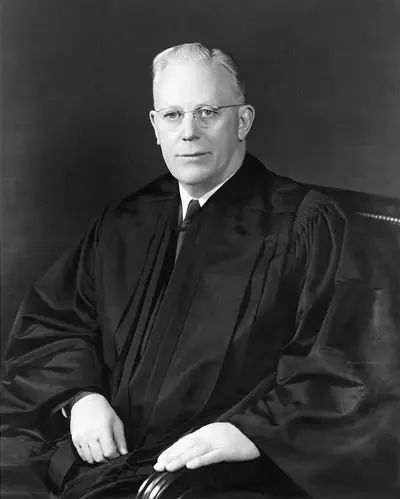
Earl Warren was an American politician and jurist who served as 30th governor of California from 1943 to 1953 and Chief Justice of the United States from 1953 to 1969. The "Warren Court" presided over a major shift in American constitutional jurisprudence, which has been recognized by many as a "Constitutional Revolution" in the liberal direction, with Warren writing the majority opinions in landmark cases such as Brown v. Board of Education (1954), Reynolds v. Sims (1964), Miranda v. Arizona (1966) and Loving v. Virginia (1967). Warren also led the Warren Commission, a presidential commission that investigated the 1963 assassination of President John F. Kennedy. He is the last chief justice to have served in an elected office before entering the Supreme Court, and is generally considered to be one of the most influential Supreme Court justices and political leaders in the history of the United States.
