Karl Barth Quotes
We are now assuming that we have here the centre and goal of all God's works, and therefore the hidden beginning of them all. We are also assuming that the prominent place occupied by this divine work has something corresponding to it in the essence of God, that the Son forms the centre of the Trinity, and that the essence of the divine being has, so to speak, its locus ... in His work, in the name and person of Jesus Christ.
Barth, Karl. Church Dogmatics, Volume II: The Doctrine of God, Part 2. Translated by G.W. Bromiley et al., T. & T. Clark, 1957, p. 115.


Some Muslims believe that since God prohibits the worship of symbols and idols, no Christian who believes in the Trinity could be a believer. For those Muslims who not only determine Islamic theology but Christian theology as well, this becomes another reason for disrespect if not hatred of Christians.


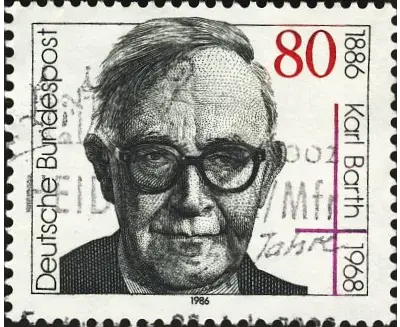
Karl Barth (/bɑːrt, bɑːrθ/; German: [bart]; 10 December 1968) was a Swiss Reformed theologian who is most well known for his landmark commentary The Epistle to the Romans (1921), his involvement in the Confessing Church, and authorship of the Barmen Declaration, and especially his unfinished five-volume theological summa the Church Dogmatics (published in twelve part-volumes between 1932–1967). Barth's influence expanded well beyond the academic realm to mainstream culture, leading him to be featured on the cover of Time on 20 April 1962.
