Cyril Ramaphosa Quotes
We are determined that expropriation without compensation should be implemented in a way that increases agricultural production, improves food security, and ensure that land is returned to those from who it was taken under colonialism and apartheid.
Ramaphosa, Cyril. "State of the Nation Address." South African Government, 16 Feb. 2018.


If the land to be redistributed is divided amongst the majority population, each parcel would be too small to make any difference in any recipient’s life. For efficient agriculture there must be large land holdings. The colonial, stolen land history is valid for most former colonies, however, in Southern Africa, the situation was more complicated. When the whites landed at Capetown in the South, they moved North “stealing” land as they went. However, in Central Africa, Shaka and his Zulus were also a colonial power, and they moved South “stealing” land from the indigenous Blacks as they went. Eventually, the two Colonial Powers—the whites and the Black Zulus—clashed and the Zulu Wars ensued. So all of the land in Zimbabwe and South Aftica was stolen from the Blacks—except about half was stolen by Blacks. After the Zulu Wars, the victorious whites ended up “stealing” land from the Black Zulus that had been stolen by them from other Blacks. Also although the English were the official colonial power, the Dutch “Afrikaners” were a powerful subculture which was dominant on many parts of South Africa and especially at the frontier and they did most of the land stealing. The ethnic English were the businessmen and the city dwellers who actually ruled that Blacks were citizens with rights and slowedmdown some of the land stealing. There is no more complicated ethnic history in the world.


His bill introduced in the House of Representatives. It did not pass.

The Romans were very organized regarding land ownership. When they conquered Africa, defeating Carthage, they found no written records of land ownership, no deeds, no bills of sale. Therefore, they opened up the entire land mass of Africa for what amounted to public colonization where the land could be worked and claimed legally. Illiterate Africans had no written records, and most areas where under the control of a strongman who “owned” all of the land with no notion of private ownership of land.
In every society where there had been past unjust ownership of land, all efforts of land reform were faced with the problem of having to dispossess the current “owners” who themselves had not been guilty of the crimes of their ancestors in unjustly obtaining the land originally. In America land reform was unworkable in most cases and the solution was usually a large monetary payment as compensation for the land.


In Burundi, family land is divided among the male children of a family. The average Burundian woman has 6.3 children at that time, nearly triple the international fertility rate. With this population growth rate, the plots of land for each person inevitably get smaller and smaller over time. At 10,745 square miles, Burundi is slightly smaller than the U.S. state of Maryland, but it holds nearly twice as many people: about 10 million. The small plots of land are inefficient to farm and provide subsistence. So the nation was in a crises as there was little industrialization and land was essential for existence for most Burundians. See {35807} and {35808}.

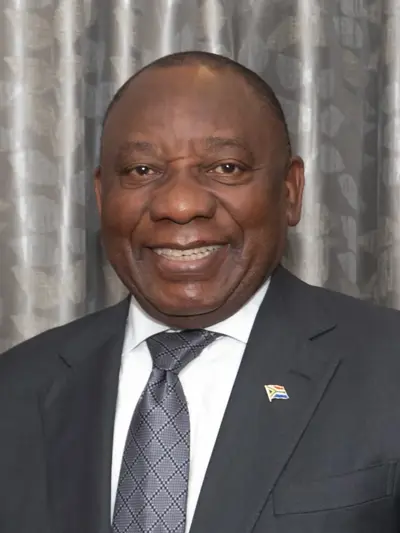
Matamela Cyril Ramaphosa is a South African politician serving as President of South Africa since 2018 and President of the African National Congress (ANC) since 2017. Previously an anti-apartheid activist, trade union leader and businessman, Ramaphosa served as Secretary General to President Nelson Mandela, Deputy President to President Jacob Zuma, and Chairman of the National Planning Commission from 2014 to 2018.
