William Stoughton Quotes
We are certainly the Lord's firstborn in this wilderness.
Of course the Native Americans who had been born for hundreds of generations did not count as the Lord's.
William Stoughton, 1631—1701, Colonial magistrate and administrator in the Province of Massachusetts Bay, Protestant Clergyman, Lieutenant Governor of Massachusetts, Chief Justice of the Salem Witch Trials, Political Address, 1668
Sourced by: Eigen's Political and Historical Quotations


At the time immigrants had to live in America 14 years before they were eligible for citizenship. The President urged a reduction in that waiting period which is what was done. This was one of the earliest statements of America as a haven to the oppressed of the world. Note that despite occasional squabbles over land use and theft, the general assessment of the President and the public was that the Indians although not as civilized had welcomed the whites with “hospitality.” The next years would produce the conflict for land and begin the massive usurpation of Indian land that would characterize American policy and practice until the latter half of the 20th century, buy which time there was little Indian land left.


The Pope separates the church from the civil law to a degree that is a rarity amongst religions. Even Catholic Pope John Paul II who prohibited priests from holding political office always saw Papal and clerical influence on civil law making and interpretation as a fundamentally important role.
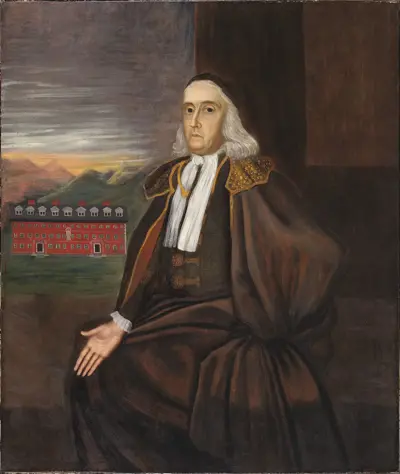
William Stoughton was a colonial magistrate and administrator in the Province of Massachusetts Bay. He was in charge of what have come to be known as the Salem Witch Trials, first as the Chief Justice of the Special Court of Oyer and Terminer in 1692, and then as the Chief Justice of the Superior Court of Judicature in 1693. In these trials he controversially accepted spectral evidence (based on supposed demonic visions). Unlike some of the other magistrates, he never admitted to the possibility that his acceptance of such evidence was in error.
