Friedrich Hayek Quotes
Unlike proportionality, progression provides no principle which tells us what the relative burden of different persons ought to be the argument based on the presumed justice of progression provides no limitation, as has often been admitted by its supporters, before all incomes above a certain figure are confiscated, and those below left untaxed.
Hayek, Friedrich A. The Constitution of Liberty. University of Chicago Press, 1960.


At the time, he, th richest man in America was paying a lower ta rate than his secretary, his employees and the waiter who served him lunch. The “Buffet Rule” was developed and named for him that said that wealthy people should pay a minimum rate of taxation regardless of tax credits, deductions and other means of tax avoidance.


An income tax had been instituted during the Civil War but had lapsed. Existing taxes were all excise or head taxes—very regressive. Later there was a political movement to bring back the income tax with the intention of taxing all income equally. There was a titanic struggle which culminated in a Constitutional Amendment allowing the income tax. None of the original politicians, for or against, the income tax could never imagine an income tax that would charge lower rates for investment income. That was the entire purpose of the income tax at the beginning—to tax investment (unearned) income. The “capital gains tax” was the creative way of the rich getting back some of what they thought the lost when the income tax was instituted.
This became known as the Buffet Principle—that the very rich should not pay a lower tax rate than the workers who make far less money than they do. President Barack Obama used this principle by name in calling for the 2011 Jobs Act which would eliminate some of the loopholes and exemptions by which the rich could avoid some or much or their tax obligation.

As a result of years of lobbying many vested interests were getting tax exemptions for their activities. Some of the richest corporations and people paid little or no taxes. This was like the old European monarchies where the dukes and nobles got tax exemptions from the king and the middle class and poor people paid a much larger percentage of their income and wealth than did the nobility. Fairness in taxation is very difficult in practice. See {633629}

The nation rejected the flat tax that was favored by conservatives in the 1930s. However, in the Republican Presidential Primary Campaign of 2000, candidate Steve Forbes made the flat tax a centerpoint of his campaign. He lost badly, but the idea caught on amongst some conservative Republicans, and has had some support since.


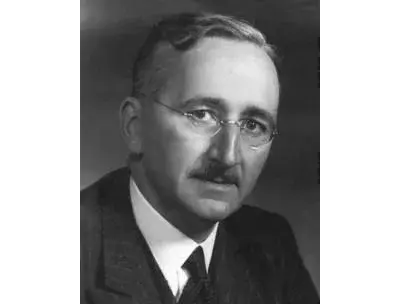
Friedrich August von Hayek CH FBA, often referred to by his initials F. A. Hayek, was an Austrian-British economist and philosopher who is best known for his defence of classical liberalism. Hayek shared the 1974 Nobel Memorial Prize in Economic Sciences with Gunnar Myrdal for his "pioneering work in the theory of money and economic fluctuations and [...] penetrating analysis of the interdependence of economic, social and institutional phenomena". His account of how changing prices communicate information that helps individuals co-ordinate their plans is widely regarded as an important achievement in economics, leading to his Nobel Prize.
