Mohamed ElBaradei Quotes
Unilateral preemption should not in any way be the model for how we conduct international relations... It brings us into very dangerous territory and it could be used and abused by any other country. We need to continue to base our security on multilateralism, and on the Security Council.
Mohamed ElBaradei, Egyptian diplomat & Director General of the International Atomic Energy Agency, Nobel Peace Prize Awardee, Interview, the Cairo Times October 23, 2003
Sourced by: Eigen's Political and Historical Quotations


This is one of he earliest uses of the term “policemen of the world.”


One major problem at the time was that the Soviet Union was supporting and instigating revolutions in many parts of the world. When most nations of the UN wanted to provide peace keeping troops to quell the conflict, the Russians would veto and block the effort, Vandenberg wanted the UN to change the rules regarding the veto. The original right of veto for the major nations was originally included at the insistence of the United States and many Americans did not want to give it up or have any exceptions lest there be more. The Russians at that time also did not want to give up any of their veto powers. Another method that Vandenberg wanted to solve the Russian peacekeeping blockage problem was for America to engage in more collective security pacts so that action could be taken without UN Security Council unanimity by going around the UN.


Actually it was the United States which insisted in the veto which required consensus of the great powers of the time. It was Russia which ended up using it far more often than any other nation.


The reality of course was that NATO was created primarily to prevent Russia from dominating Europe. Baker could not officially state that. There are many experts who believe that if Russia had been allowed to join NATO after the breakup of the Soviet Union, relations with Russia may have been better. However, the NATO charter gives each member nation a veto over activities and there was little trust in Russia by most of the NATO members.


With Germany’s WWII history of military aggression, even over 60 years later, that country was very cautious about any use of military force and unilateral force was out of the question.

3rd Earl Russell of Kingston. The military weak nations agreed with him, but the militarily strong ones did not—especially America and England which had the Atomic Bomb when others did not.


The United States position was that United Nations approval is not required when it is acting to defend itself as the United Nations Charter gives every nation the unilateral right of self defense. America justified the action on the ground that the Iraqis were in violation of the UN resolution regarding weapons of mass destruction and if Iraq had or was developing such weapons, the United States would be a likely target and the Iraq leadership had already called for death and destruction to America so their intention was clear. No such weapons were found.

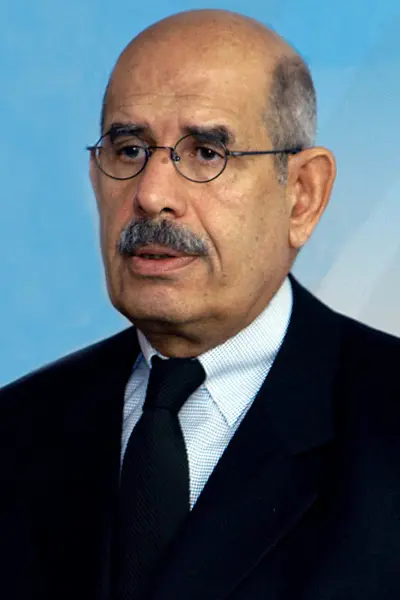
Mohamed Mustafa ElBaradei is an Egyptian law scholar and diplomat who served as Vice President of Egypt on an interim basis from 14 July 2013 until his resignation on 14 August 2013.
