Alvin Adams Quotes
Unfortunately, the attitude of many towards the press, humanitarians included and especially government workers, is often one of suspicion, if not outright fear.
Adams, Alvin. "Dealing with the Press." Crosslines Essential Field Guide to Humanitarian and Conflict Zones, edited by Edward Girardet and Jonathan Walter, Crosslines Global Report, 1996.


The evils of the time were even worse than in modern times. Most newspapers, journals, and periodicals were in 1835 actually owned and operated by political parties or people totally identified with political parties. In modern times, there are publications and blogs which are controlled by political forces, but most are not.


_0_thumbnail_47x47.jpg)
Ironically politicians need the journalists to communicate their message adn get public exposure and the Journalists need the politicians to provide subject matter and to serve as sources. Each uses the other which produces resentment.


Tsvangirai’s party had won the election of 2008, but the Dictator Robert Mugabe refused to relinquish power. Sanctions against Zimbabwe by most of the world pressured Mugabe and Tsvangirai to accept a power sharing arrangement. However, Mugabe once the sanctions were lifted reneged on the agreement. He still controlled the state media which was, according to the 2008 agreement, to be completely non partisan. What this quotation shows is that the dictator maintained his control over the military, the police, and the media and with that really controlled the country.
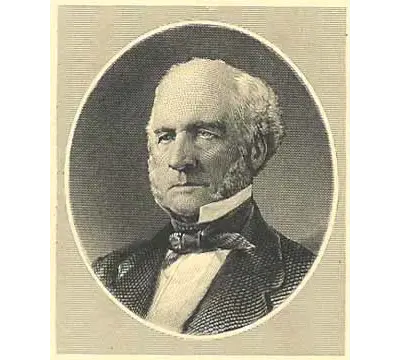
Alvin Adams was the founder of Adams and Company, a forerunner to Adams Express, one of the first companies to act as a carrier for express shipments by rail in the United States. Adams and Company provided shippers with a complete shipping solution, picking up goods at the shipper's location, carrying them to the railroad terminal, and then delivering them from the distant railroad terminal to the recipient's door.
