Samuel Johnson Quotes
Treating your adversary with respect is striking soft in battle.
Boswell, James. The Life of Samuel Johnson, LL.D. Charles Dilly, 1791.


When the Mexican police and the army started to crack down on the drug cartels for killing each other over drug terrirory, the cartels struck back and started murdering police and soldiers and often civilians as well. At the time ex President Fox made this statement, the Mexican government admitted to 20,000 murders but many observers believed that the number was 50,000.


For various historical reasons the United States and Iran at that time had no diplomatic relations and there was no easy way for the countries to negotiate their differences. The United States public policy was that Iran would not be allowed to develop a nuclear weapon which was backed up by severe economic sanctions and the threat of military force. Kucinich wanted face to face negotiations and discussions before we resorted to military action.


He delivered this speech towards the end of the 1st year of President Donals Trump's Administration. Althought he never mentioned Trump by name, this speech was a rare major criticism of a sitting president by a former president. This was also one of the few speeches Bush gave after leaving office. On the same day, former President Barak Obama also gave a major speech and also castigated President Trump although neither of the ex-presidents knew that the other was about to deliver their criticism of Trump. It was one of the very unusal occurances in American history.
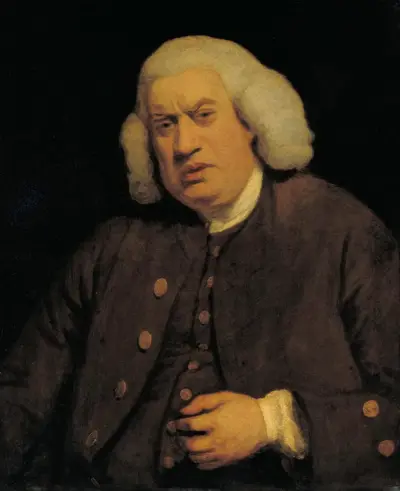
Samuel Johnson, often referred to as Dr Johnson, was an English writer who made lasting contributions to English literature as a poet, playwright, essayist, moralist, literary critic, biographer, editor, and lexicographer. Religiously, he was a devout Anglican, and politically a committed Tory. The Oxford Dictionary of National Biography describes Johnson as "arguably the most distinguished man of letters in English history". He is the subject of James Boswell's The Life of Samuel Johnson, described by Walter Jackson Bate as "the most famous single work of biographical art in the whole of literature".
