Jacob Weisberg Quotes
Trade, tourism, cultural exchange, and participation in international institutions all serve to erode the legitimacy of repressive regimes.
Weisberg, Jacob. "The Case for Free Trade." Slate, The Slate Group, 2005.


China, in the last – less than half a century, has become one of the great democracies of the world.
At the time, the President wanted to get Chiang to fight aggressively against to Japanese when he was taking large amounts of American monetary aid and military equipment but using it to try and exterminate Mao and his Communists who were fighting the Japanese. FDR was clearly trying to flatter Chiang and his wife and gain political points with the China Lobby but it is not known whether or not he really believed this and other statements. Chiang was a vicious, cruel, corrupt military dictator but he had become a “Christian” and always spoke of the importance of democracy of which there was none in China. Our intelligence from China was very bad at the time, with the secret reports of General Stillwell (the senior American military man in China) and that of a few state department China hands were in total contradiction to the Public information that the President was receiving from Henry Luce and his Time Magazine and the large China Lobby, much of which was ironically paid for with the American AID money given to China. So it is not known whether Roosevelt actually believed this and other statements or was just being diplomatic.


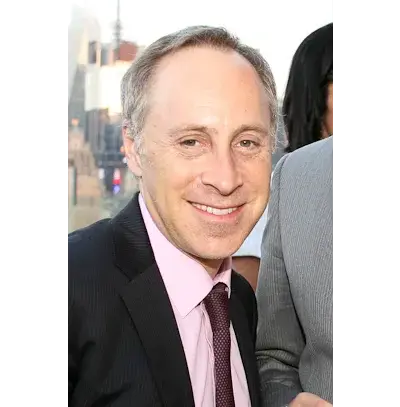
Jacob Weisberg (born 1964) is an American political journalist, who served as editor-in-chief of The Slate Group, a division of Graham Holdings Company. In September 2018, he left Slate to Co-found Pushkin Industries, an audio content company, with Malcolm Gladwell. Weisberg was also a Newsweek columnist. He served as the editor of Slate magazine for six years before stepping down in June 2008. He is the son of Lois Weisberg, a Chicago social activist and municipal commissioner.
