Alfred Rosenberg Quotes
Today we see the steady stream from the countryside to the city, deadly for the Volk. The cities swell ever larger, unnerving the Volk and destroying the threads which bind humanity to Nature; they attract adventurers and profiteers of all colours, thereby fostering racial chaos.
Rosenberg, Alfred. The Myth of the Twentieth Century: An Evaluation of the Spiritual-Intellectual Confrontation of Our Age. Translated by Vivian Bird, Noontide Press, 1982, p. 336.

Spengler and some others viewed with alarm the urban migration that had come with the industrial revolution. That migration was relatively minor compared to what took place in the remainder of the 20th century. In most developed coutries the rural population has become very small and the urban and suburban totally dominant.


Howard was one of the first people to recognize the migration from the country to the cities brought about by the Industrial Revolution and then suggest solutions. He advocated planned suburban communities that had some elements of the country, but allowed a density of people to function in an industrial economy. He called them “Garden Cities”. Forest Hills in New York and other American planned communities were much influenced by his thinking as were many other new communities since.


See {621891} for a similar view.


Western populists were terribly suspicious of the cities. Note that the migration to cities was noticeable enough to be considered a problem. Better roads and the railroads made relocation easier.
Cahokia was a very large Native American city just across the Mississippi River from St. Louis. In 1250, its population was about 15,000, comparable to that of London or Paris during the same period. At the time of the American Revolution, it was larger than New York, Boston of Philadelphia having 40,000 inhabitants at its peak. Tiahuanaco was a large city—30,000 at its peak—in Bolivia. The very ability to create and sustain such large communities shows that the Indians of the Americas were not simply hunter-gatherers but were very sophisticated in manipulating their environment and organizing large numbers of people.


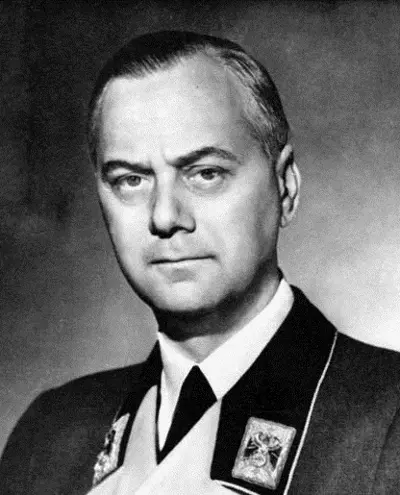
Alfred Ernst Rosenberg was a Baltic German Nazi theorist and ideologue. Rosenberg was first introduced to Adolf Hitler by Dietrich Eckart and held several important posts in the Nazi government. He was the head of the NSDAP Office of Foreign Affairs during the entire rule of Nazi Germany (1933–1945), and led Amt Rosenberg ("Rosenberg's bureau"), an official Nazi body for cultural policy and surveillance, between 1934 and 1945. During World War II, Rosenberg was the head of the Reich Ministry for the Occupied Eastern Territories (1941–1945). After the war, he was convicted of crimes against peace; planning, initiating and waging wars of aggression; war crimes; and crimes against humanity at the Nuremberg trials in 1946. He was sentenced to death and executed on 16 October 1946.
