Henri Hauser Quotes
To the harsh doctrines justifying the dominion of France over inferior races there at first succeeded a naïve idealism, which saw in all the subjects of France men of equal value ready to be transformed into true Frenchmen. Experience and contact with the various populations of the French Empire have modified this exaggerated view and have taught France the complexity of her colonial problems. She knows now that her task is not to assimilate white, black, and yellow populations, each of them with its own traditions, but to help each, in its own interest as well as in the interest of all, to develop along the lines of its own individual civilization
Henri Hauser, 1866-1946, Algerian-born French economist & historian, “Greater France”, Foreign Affairs, December 1923
Sourced by: Eigen's Political and Historical Quotations

The eventual demise of the French Colonial Empire was predicted by almost all scholars and statesmen except the French. It would be after the Second World War when the French were proved to have been delusional on this point.

Most immigration reformers want to open immigration more widely. Ward wanted immigration restricted to certain ethnicities and limited. He wanted a uniformity of assimilation and not diversity.


This is a complaint similar to that made by anti-immigrant Americans. France, like most other countries of the world, has never had the large scale immigration of today, nor have they had such a large proportion of the same ethnicity at once—in this case, Muslim North Africans. There were never, before the last decades, enough immigrants of any ethnicity in France to have a choice of maintaining their traditional languages and culture and not learning French or otherwise assimilating. America, in contrast, had large immigrations of different ethnicities, and despite the erroneous beliefs of immigration opponents, these blocs of immigrants have wherever there was sufficient density—usually cities, they maintained their old language and other customs. However, their children and the next generation in almost all cases have abandoned the language and many of the customs of the old country. This was true of the Germans, the Irish, the Italians, the European Jews, the Russian Jews, the Scandinavians’, and the Hispanics with their different cultures.

This quotation illustrates the difference between France proper and “Greater France” including its colonies without which it was perceived that France could not be a great power with its limited land mass and low fertility rate. This is why De Gaulle and other French leader fought so hard to maintain control over their colonies. Ironically, after France lost her colonies, she maintained her role as a major nation by virtue of its technology, industry and culture. A nuclear power was a power by definition, and France has had exceptional scientific and technological prowess. However, for many French leaders like De Gaulle, this was not enough to be a major power. They yearn for the colonial days where the French language was the most important in the world, and the French military was on a par with the other great power.


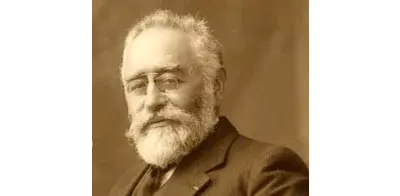
Henri Hauser was a French historian, geographer, and economist. A pioneer in the study of the economic history of the early modern period, he also wrote on contemporary economic issues and held the first chair in economic history to be established at a French university. He was born in Oran into a middle-class Jewish family who had moved to French Algeria for health reasons but returned to France when Hauser was four years old. Hauser was educated at the Lycée Condorcet in Paris and then at the École Normale Supérieure where he came first in both the entrance and leaving examinations. He initially taught in provincial lycées before taking his doctorate in 1892 with a thesis on the 16th-century Huguenot leader, François de la Noue. Hauser went on to become a professor of ancient and medieval history at the University of Clermont-Ferrand, modern history and geography at the University of Dijon, and finally a professor of history and economic history at the Sorbonne from 1919 to 1936. His 1905 book L'impérialisme américain predicted the decline of Europe and the dominance of the United States, while his 1915 Méthodes allemandes d'expansion économique analyzed the role played by German industry in the outbreak of World War I. Hauser was awarded the Legion of Honor in 1919 and in 1945 the Académie française awarded him the Prix de l'Académie for his life's work.
