Jean Racine Quotes
To save our imperiled honor everything must be sacrificed, even virtue.
Racine, Jean. Phèdre et Hippolyte. Jean Ribou, 1677, Act 3, Scene 3.


After the Civil War, the General, who had little money, was offered a huge sum to write his memoirs for publication. He refused.


Historically almost all dictators seized their power and war criminals committed their murders to “save their nation.”

Other war criminals had committed suicide in conformity with the Japanese custom. But Tojo stayed alive so that he could take the responsibility from the Emperor Herohito who many Americans wanted tried for his actions and inactions during the war. But Tojo made an error. At the beginning of his trial he testified that he always obeyed the Emperor even though he was the Prime Minister and the head of government. Therefore, the Emperor was guilty of those crimes he had discussed with Tojo and the cabinet. Later, he was persuaded to change his testimony and said that he led the country to war and the Emperor wanted peace, a statement that few believed. See {587278}. While the Emperor had committed war crimes General MacArthur believed that the Emperor left in place and unpunished would make it easier to govern Japan, than if he were tried and punished. However, he and his staff fabricated a report to exonerate the Emperor rather than make his recommendation to his superiors and the President so they could either accept his view or not. He was a unilateralist in the administrative sense of the word. See {587279} for additional material on the Emperor’s guilt.


In reference to the Fugitive Slave Law:


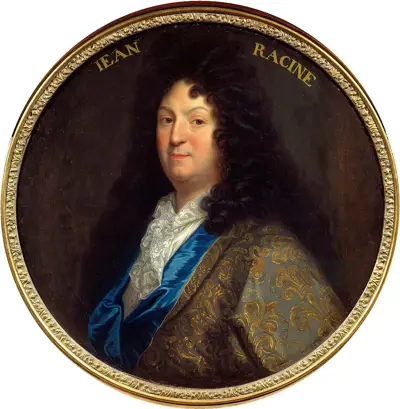
Jean Racine (/ræˈsiːn/ rass-EEN, US also /rəˈsiːn/ rə-SEEN), baptized Jean-Baptiste Racine, was a French dramatist, one of the three great playwrights of 17th-century France, along with Molière and Corneille, and an important literary figure in the Western tradition. Racine was primarily a tragedian, producing such "examples of neoclassical perfection" as Phèdre, Andromaque, and Athalie. He did write one comedy, Les Plaideurs, and a muted tragedy, Esther for the young.
