Susan B. Anthony Quotes
Throughout this protracted and disgraceful assault on American womanhood, the clergy baptized each new insult and act of injustice in the name of the Christian religion, and uniformly asked God's blessing on proceedings that would have put to shame an assembly of Hottentots.
Susan B. Anthony, 1820-1906, Woman's Suffrage Leader, Elizabeth Cady Stanton, 1815-1902, First President, National Woman Suffrage Association, Matilda Joslyn Gage, 1826-1898, Suffragette, Abolitionist & Historian, Statement signed by all three women
Sourced by: Eigen's Political and Historical Quotations

Dr. Saadawi was fired from her government post for revealing the status of women in the country. She was also actually arrested and jailed as well for impairing national “values.” See .{586709}.


This statement is not only remarkable for its time, but also violated Hindu religious tradition and scripture. See Padmapurana.


Mill was one of the early thinkers to realize that gender discrimination was not only unfair to women, but was a barrier to progress for the whole society including the men.


Vladimir Lenin


Samuel Langhorne Clemens, 1835-1910. This is an excellent example of political sarcasm. Read literally, this quotation indicates that he was opposed to women’s suffrage, and was a fairly extreme sexist. What he was doing however, is stating publicly the argument that many men made at the time—especially those who were not highly literate or well-educated. By stating the argument of the opposition, he allows fair minded people to be exposed to views that they might otherwise not be exposed to. Many sexist men at the time read the quotation and, not appreciating Twain’s sarcasm, concluded that Twain, unlike most of the “egghead intellectuals” of the day was an opponent of the increasingly militant feminists. In actuality, Mark Twain was a strong feminist. See {630191}, {630192}, & {630193}.

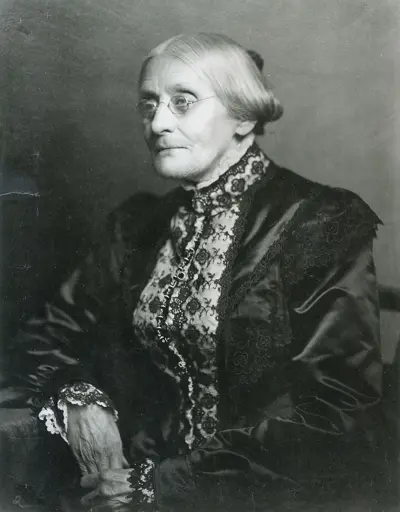
Susan B. Anthony was an American social reformer and women's rights activist who played a pivotal role in the women's suffrage movement. Born into a Quaker family committed to social equality, she collected anti-slavery petitions at the age of 17. In 1856, she became the New York state agent for the American Anti-Slavery Society.
