Lucretia Mott Quotes
Those who read the Scriptures and judge for themselves, not resting satisfied with the perverted application of the text, do not find the distinction that theology and ecclesiastical authorities have made in the condition of the sexes.
Mott, Lucretia. Discourse on Woman. T. B. Peterson, 1850, p. 5.


Ferrer was the last public figure to be executed in Europe for heresies like this.


The Kotel -- or the "Western Wall" or the "Wailing Wall" as most outside of Israel call it -- is the Holiest of Jewish places where many Jews gather and pray. But the Ultra-Orthodox Rabbis who were charged by the Israeli Government to manage the Wailing Wall and vicinity had refused to allow women to pray at the wall. After much litigation, the Israeli Supreme Court ruled that women had a right to pray there or anywhere else. After much foot-dragging, a small out of the way area at the wall was designated for women, but many Jews wanted to pray as a family which also offended those Rabbis in control of the area, After more Supreme Court Litigation the Government was ordered to establish an area at the Wall that was open to all. The Israeli Government Ministerial Committee for Holy Places was charged with implementing the Supreme Court rulings. However, Regev--who had ambitions of running for Prime Minister, was a conservative whose political base included the Ultra-Orthodox. When they objected to the Supreme Court Ruling, she resigned from the Commission she chaired rather than implement the law of the land. Her official view on the dire consequences of women (or mixed gender) praying at the Wall brought her the support of her base and the strong opposition of most Israeli women and many men as well.


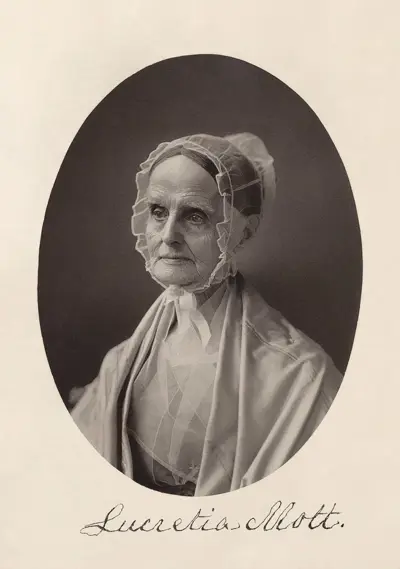
Lucretia Mott was an American Quaker, abolitionist, women's rights activist, and social reformer. She had formed the idea of reforming the position of women in society when she was amongst the women excluded from the World Anti-Slavery Convention held in London in 1840. In 1848 she was invited by Jane Hunt to a meeting that led to the first public gathering about women's rights, the Seneca Falls Convention, during which Mott co-wrote the Declaration of Sentiments.
