Karl Liebknecht Quotes
This republic represents the greatest basis for that universal socialist order, the creation of which is at the present time the historic task of the International Proletariat.
Liebknecht, Karl. "Proclamation of the Free Socialist Republic of Germany." 9 Nov. 1918.


Saloth Sar Pol Pot. His view was that any small merchant or tradesman running a business was a capitalist, and all educated were enemies of the people. He moved entire populations out of the cities into the countryside where they would live as peasants or be murdered as about 20% of the entire population as. Therefore, in his warped view, the capitalists could no longer “control” Cambodia.


Vladimir Lenin. Some anti-democratic, rabid opponents of communism used this quotation to argue that democracy was just a step on the way to Communism and thus democracy was a part of the communist conspiracy—an extreme form of Red Scare.

The Cuban dissidents and the CIA had assured President Kennedy and the Joint Chief’s of Staff that as soon as the CIA organized troops landed there would be uprisings throughout Cuba and the invaders would be supported by the Cuban people, happy to overthrow Castro. After the landing, there was not a single uprising nor was there any assistance provided to the invaders who were easily captured by Castro’s men. Castro was very popular. The CIA and Cuban dissidents were guilty of wishful thinking.

Vladimir Lenin. Most did not and the Communist government was brutal and murderous in forcing them into the Communist culture, outlook, and behavior. See {640096} for a description of some of the effort.


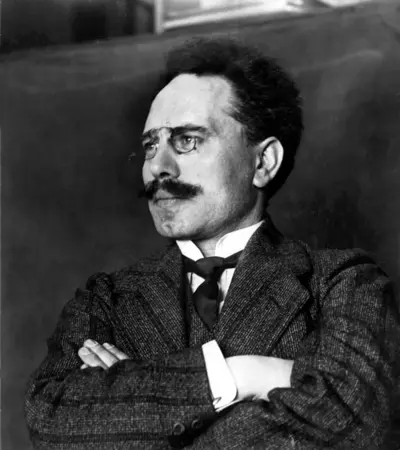
Karl Paul August Friedrich Liebknecht (German: [ˈliːpknɛçt] (listen); 13 August 1871 – 15 January 1919) was a German socialist politician and theorist, originally of the Social Democratic Party of Germany (SPD) and later a co-founder with Rosa Luxemburg of the Spartacist League and the Communist Party of Germany, which split from the SPD after World War I. He is best known for his opposition to the war in the Reichstag and his role in the Spartacist uprising of January 1919. The uprising was crushed by the SPD government and the Freikorps (paramilitary units formed of World War I veterans), which summarily executed Liebknecht and Luxemburg.
