Henry Clay Quotes
They [speakers] enjoin promptitude and impartiality in deciding the various questions of order as they arise; firmness and dignity in his deportment toward the House; patience, good temper, and courtesy towards the individual Members ... the fair exhibition of every subject presented for consideration. They especially require of him, in those moments of agitation from which no deliberative assembly is always entirely exempt, to remain cool and unshaken amidst the storms of debate, carefully guarding the preservation of the permanent laws and rules of the House from being sacrificed to temporary passions, prejudices, or interests.
When Clay was elected Speaker of the House, he defined the role.
Henry Clay, 1777-1852, U.S. Congressman and Senator (National Republican & Whig, KY), Speaker of the House, U.S. Secretary of State, House speech, December 21, 1823
Sourced by: Eigen's Political and Historical Quotations

The papyrus appears to be an instruction booklet for government officials.


Prince de Benévant


Ford, then Vice President, was attending a Senate Republican policy luncheon during the Watergate crisis. The senators began discussing the possibility of sending a delegation to President Nixon, advising him to resign.

Even though Roosevelt was the most popular President since George Washington, he had his critics. Taking office in 1900 after the assassination of President McKinley, he was often compared stylistically.
The Arab Culture has traditionally been one of poetic oratory with much exaggeration. The last of the three statements above was his attempt to limit this tendency when facts were needed. This is one of his desires that was short-lived and is a huge problem in modern Arab administration of most things.


For giving such wise counsel, he was killed by a young militant.

This is the modern view of the old Chinese adage with a modern democratic motivation.

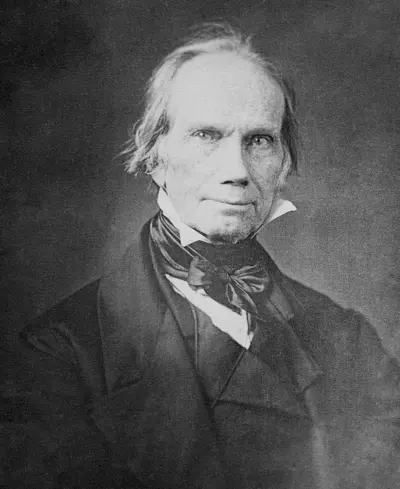
Henry Clay Sr. was an American attorney and statesman who represented Kentucky in both the Senate and House. He was the seventh House Speaker and the ninth Secretary of State. He received electoral votes for president in the 1824, 1832, and 1844 presidential elections. He also helped found both the National Republican Party and the Whig Party. For his role in defusing sectional crises, he earned the appellation of the "Great Compromiser" and was part of the "Great Triumvirate".
