John Milton Quotes
These are thy glorious works Parent of Good, Almighty, thine this universal Frame, Thus wondrous fair; thy self how wondrous then! Unspeakable, who sitst above these Heavens To us invisible or dimly seen In these thy lowest works, yet these declare Thy goodness beyond thought, and Power Divine: Speak ye who best can tell, ye Sons of light, Angels, for ye behold him, and with songs And choral symphonies, Day without Night, Circle his Throne rejoicing, ye in Heav'n, On Earth join all ye Creatures to extoll Him first, him last, him midst, and without end.
Milton, John. Paradise Lost. Edited by Alastair Fowler, 2nd ed., Routledge, 2007, p. 277.


This phrase is most likely taken from Bernard Shaw, see {47059}

At the time, it was very difficult for people who had been taught all their lives that God was directly responsible for the creation to accept the notion of evolution. At the time, there was not the overwhelming evidence proving Darwin’s theory that we have today. Nor did theologians realize that evolution and Darwinism were not inconsistent with the concept of a creator and supreme being. Nonetheless, there are still those who, like Agassiz, reject evolution and insist that the Biblical version of creation is literally true. See {586990}. Then there are people who have come up with the concept of Intelligent Design which originated with Agassiz though he never called it that. Most religious people today, in contrast, see no conflict in natural selection as described by Darwin and later proven, and the concept of God. They see the Biblical creation as metaphorical and natural selection as the product of an omniscient supreme being.


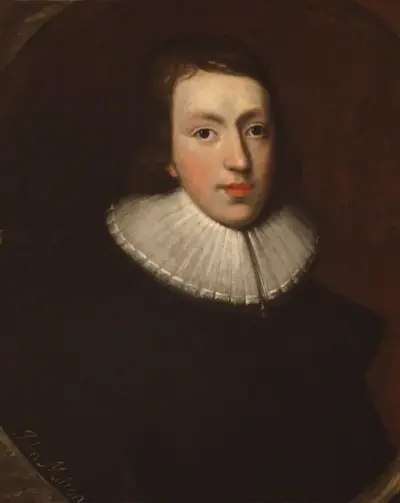
John Milton was an English poet and intellectual who served as a civil servant for the Commonwealth of England under its Council of State and later under Oliver Cromwell. He wrote at a time of religious shifts and political instability, and is best known for his epic poem Paradise Lost (1667). Written in blank verse, Paradise Lost is widely considered to be one of the greatest works of literature ever written.
