George Bernard Shaw Quotes
There is only one religion, though there are a hundred versions of it.
Shaw, George Bernard. Plays: Pleasant and Unpleasant. Vol. 2, Grant Richards, 1898, p. vii.


The people of the Book refers to Jews and Muslims. This passage of the Koran is used to justify ecumenism with Muslims integrated with Jews and Christians. The Koran consists of Muhammed’s sayings, and he himself had opinions about Jews and Christians that differed from time to time. So although this passage signals a tolerant religion, in other places Muhammed preached violence against the people of the Book. At first Muhammed and his followers expected to see the people of the Book adopt Islam as their religion. When they did not, relations deteriorated somewhat.


His protest was focused on Middle East policies which he believed did not value the lives of Muslims as highly as Christians and Jews. The irony of this protest is that United States policy claims to value all life equally as do virtually all industrialized democracies. Omeish however is unusual among world Islamic leaders and politicians in that he values Christian and Jewish life as much as Muslim. Most, typically value Muslims almost exclusively and many advocate the killing of Christians and Jews.

Head of the Sikh Religion. His teaching was that deeds determined the man, not the professed belief and that the existing religions turned man against man.


Quintus Septimius Florens Tertullianus. This quote is historically very important as it is one of the first expressions of religious tolerance. Tragically, this principle was ignored by most Christians for over a millennium. Some Christians still ignore it. See {626754} for a modern example.

He led an Islamic rebellion against the Quinn Dynasty which ended in his beheading in 1873. Since the Christians were also a minority, he tried to form an alliance with them. Hatred of Christians is not endemic to Islam—politics affect the situation also. His tomb is shown in the graphic.
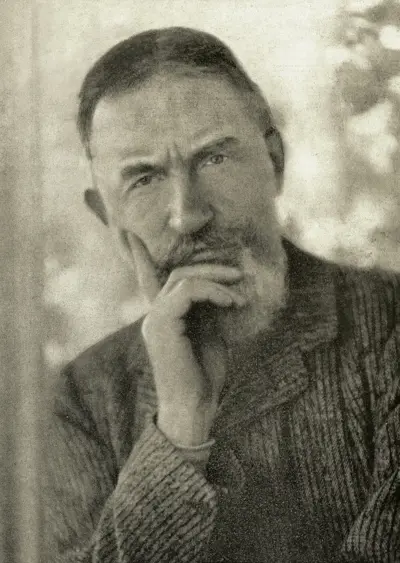
George Bernard Shaw, known at his insistence simply as Bernard Shaw, was an Irish playwright, critic, polemicist and political activist. His influence on Western theatre, culture and politics extended from the 1880s to his death and beyond. He wrote more than sixty plays, including major works such as Man and Superman (1902), Pygmalion (1912) and Saint Joan (1923). With a range incorporating both contemporary satire and historical allegory, Shaw became the leading dramatist of his generation, and in 1925 was awarded the Nobel Prize in Literature.
