Fidel Castro Quotes
There is not Communism or Marxism, but representative democracy and social justice in a well-planned economy.
Castro, Fidel. Address to the Economic Club of New York. New York, 23 Apr. 1959.


What the Supreme Leader did not understand was that the very books that he recommended to see the faults of America were the very instruments that influenced the American reformers to change and improve America. And the lesson he missed is that he would not allow authors to heavily criticize the current Iran and have a wide audience so that Iran could improve. His examples were very well chosen. The lesson is the wrong one however.

In the 1970s both England and America had a red scare here some ultra conservatives actually feared that their populations would adopt and vote for communism. The intelligence was so bad that the more the Soviet Union was financially and politically collapsing, the more they were feared.

This is a fascinating historical quotation. Karl Marx and Friedrich Engels wrote The Communist Manifesto in 1848 in England and in less than 40 years, American politicians were already in fear of the doctrine. Communism had one of the fastest spreads of any ideology. By 1886 we already see the beginnings of a Red Scare. At the time, most laws were designed to protect the wealthy and the middle class, and many discriminated against workers and the poverty stricken.

The Great Depression, even more so than the Great Recession, shattered the faith of most people in the Capitalistic system as it was then operating. Conservatives like Stimson believed that reform could be achieved without diminishing the rights of the individual vis a vis the state. To a great extent he was right, but ironically, it tool a liberal like FDR and a Democratic Congress to make the necessary reforms the Republicans would not make and at the same time, not go so far as to reduce the freedom of individual action protected by the Constitution. Arguably, there are several areas where Americans have much more freedom in modern times than they did in 1929 when Hoover’s inaction brought on the Great Depression so severely. Today, minorities, women, dissidents, religions all have much more freedom that in 1929.

March 4, 1933 was the date that Franklin Delano Roosevelt had assumed the Presidency from Herbert Hoover and used government to combat the Great Depression whereas Hoover would not take any of these steps as the conservative wing of his party and he regarded anything that government did was “creeping socialism”. Historically, it is useful to recall what steps Roosevelt took that were described as socialism. These include Social Security, Federal Deposit Insurance for bank accounts, aid to farmers, the Civilian Conservation Corps, Regulation of the stock market, regulation of banks and many other things that are key elements of modern capitalism which virtually every capitalistic nations has in one form or another. Long after Truman was out of office, the most conservative elements of the Republican Party have accused every Democratic President of “creeping socialism” when they were actually quite opposed to socialism. Even when their career before their presidency was full of criticisms of socialism and policies that are opposite, as in the case of President Obama, the President has been accused of being a socialist. However, it started with Franklin Delano Roosevelt and Harry S Truman.


Immediately after the Russian Revolution, the provisional government appointed him as Ambassador to the United States. However, the provisional government was supplanted when the Bolsheviks took over. Not enamored of Communism, he stayed in the United States with many other Russian refugees.


Many people had come to the conclusion that capitalism as it then existed was not sufficient to correct some of the serious inequities in society. They saw that socialism tended more to focus on those. However, they also saw in socialism per se, as it was than advocated, many other problems. Steffens seems to be the first person to describe that type of person, in this case, himself.


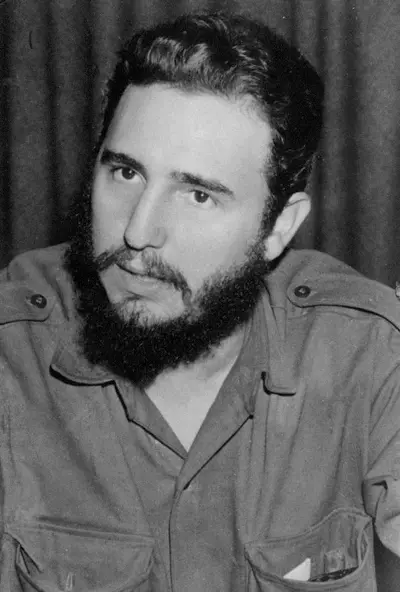
Fidel Alejandro Castro Ruz better known internationally as Fidel Castro, was a Cuban revolutionary and politician who served as Prime Minister of Cuba from 1959 to 1976 and President from 1976 to 2008. Ideologically a Marxist–Leninist and Cuban nationalist, he also served as the First Secretary of the Communist Party of Cuba from 1961 until 2011. Under his administration, Cuba became a one-party communist state; industry and business were nationalized, and state socialist reforms were implemented throughout society.
