Alfred, Lord Tennyson Quotes
There is more truth in honest doubt, Believe me, than in all the creeds.
This is one of his most quoted lines. However, a Syrian Poet Abdallah al-Maarri, 973–1057 preceeded him with this idea by almost 1000 years. See {624477}.
Alfred Tennyson, 1809-1892, British Poet, Member of the House of Lords, Memoriam XCVI
Sourced by: Eigen's Political and Historical Quotations

This Quatrain amazingly preceded Tennyson’s expression of the same idea by almost 1000 years. See {620306}. At the time this was written Islam was entering the flower of its intellectual height where one could express doubt and be a religious dissident and not be murdered or even censored in many Muslim communities. At that time Islamic science, mathematics, philosophy, and literature was well in advance of Christian Europe. However, a hundred years later, the Islamic world went through a “Closing” where all new ideas became suspect and the religion and culture became stultified and Europe advanced while the Islamic world ceased its creative intellectual development.

Spinoza’s ideas were considered so radical and dangerous that he was the only man in history who was excommunicated by the Catholics, the Jews and the Muslims.


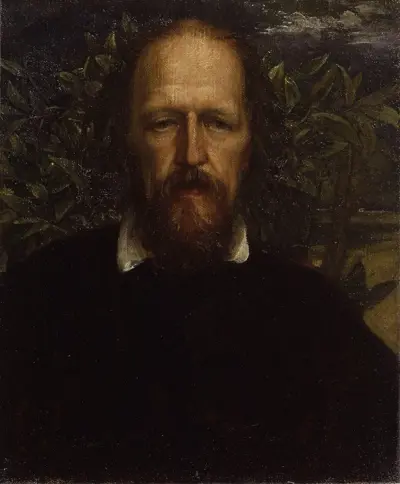
- Born: August 6, 1809
- Died: October 6, 1892
- Nationality: English
- Profession: Poet
Alfred Tennyson, 1st Baron Tennyson FRS was a British poet. He was the Poet Laureate during much of Queen Victoria's reign and remains one of the most popular British poets. In 1829, Tennyson was awarded the Chancellor's Gold Medal at Cambridge for one of his first pieces, "Timbuktu". He published his first solo collection of poems, Poems Chiefly Lyrical in 1830. "Claribel" and "Mariana", which remain some of Tennyson's most celebrated poems, were included in this volume. Although decried by some critics as overly sentimental, his verse soon proved popular and brought Tennyson to the attention of well-known writers of the day, including Samuel Taylor Coleridge. Tennyson's early poetry, with its medievalism and powerful visual imagery, was a major influence on the Pre-Raphaelite Brotherhood.
