Green Clay Smith Quotes
There are a large number of white people who never owned a foot of land, who never have been in possession of any property, not even a cow or a horse, yet who have been as true and devoted loyalists as anybody else.
The Freedmens Bureau was created after the Civil War to assist newly emancipated Black slaves. In 1866, there was a debate in Congress to allow poor whites to obtain the services of the Freedmens’ Bureau. As a practical matter most of the poor whites were just as illiterate and poor as the ex-slaves. President Andrew Johnson was particularly anxious to assist the poor whites. See Quotation 643686.
Green Clay Smith Debate to extend the Freedmen’s Bureau House of Representatives 1866 Excerpt From: Nancy Isenberg. “White Trash.” iBooks.
Sourced by: Eigen's Political and Historical Quotations

Under the pre-Civil War Southern economic system the poor whites had little chance of upward mobility and were in many wars as poorly off as slaves. Johnson saw this reform as much more important than the emancipation of the Negro.


Muir had spoken at the Convention of Scottish Friends of the People at Edinburgh in 1792. He had advocated election reform allowing all men to vote, not just property owners and was sentenced by Braxfield to the Australian penal colony at Botany Bay. Braxfield expressed the deep distrust the establishment felt even for merchants, traders and others with fungible assets.
_0_thumbnail_47x47.jpg "William Gregg of South Carolina")
Gregg exclusively hired poor whites to work in his factory, hoping to elevate them into a more civilized—though still a menial—station, providing steady work and granting access to schools.


The cycle of poverty of 20th century America was not new. It has existed for centuries in most cultures and countries.


Although Fiorello La Guardia proposed an aggressive reform program for New York City, he did not go far enough for some.


For a later manifestation of the problem Franklin described see Anti-Renters in 1839.


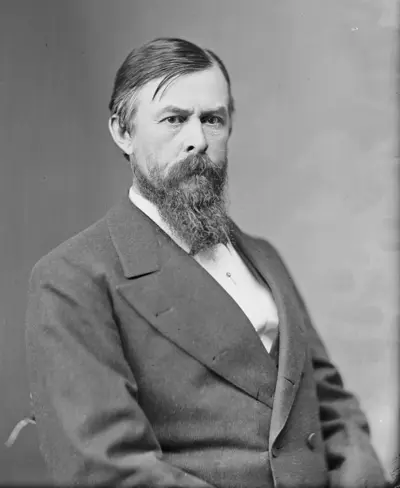
- Born: July 4, 1826
- Died: June 29, 1895
- Nationality: American
- Profession: Politician
Green Clay Smith was a United States soldier and politician. Elected to the Kentucky state house before the American Civil War, he was commissioned as a Union officer when he volunteered, advancing to the rank of brigadier general before he resigned to go to Congress. He was promoted to Major General by brevet on March 13, 1865. He was elected to the US Congress from Kentucky in 1862, representing the Unionist Party and serving until 1866.
