Jonathan Edwards Quotes
The wrath of God burns against them, their damnation does not slumber; the pit is prepared, the fire is made ready, the furnace is now hot, ready to receive them; the flames do now rage and glow.
Edwards, Jonathan. Sinners in the Hands of an Angry God. S. Kneeland and T. Green, 1741, p. 10.


Action he advocated to his followers who attacked and killed pro-slavery advocates in Kansas. The civil war of Kansas was over whether Kansas would enter the Union as a slave state of a free state. If a free state, the free states would be able to block further slavery. If Kansas were to become a slave state, the slave states would have a sufficient majority to make all future expansion hospitable to slavery. The slavery forces started sending man and families into Kansas so that they could vote; the abolitionists did the same. Both sides armed and a war began with each faction trying to kill or drive the other faction out of Kansas before the vote. See {617388} and {612516}.


This Hadith is said to represent the view of the Prophet, Muhammad. In Islam its authority is second only to the Koran itself. This quotation is given by many Muslim Imams to illustrate that suicide of any kind is contrary to Islam. Therefore these imams condemn suicide bombing as un-Islamic. Others—the terrorists—obviously disagree.

He was reacting to the fact that the Supreme Court had ruled that a State could not criminalize adult, consensual, homosexual behavior.


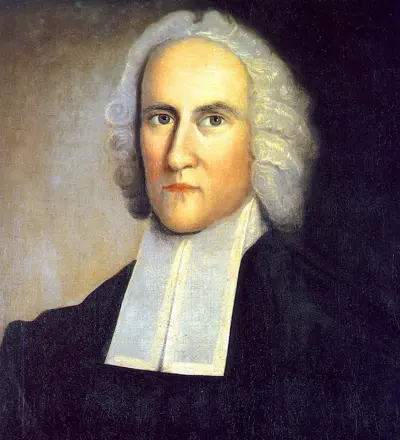
Jonathan Edwards was an American revivalist preacher, philosopher, and Congregationalist Protestant theologian. Edwards is widely regarded as one of America's most important and original philosophical theologians. Edwards' theological work is broad in scope, but rooted in the pedobaptist Puritan heritage as exemplified in the Westminster and Savoy Confessions of Faith. Recent studies have emphasized how thoroughly Edwards grounded his life's work on conceptions of beauty, harmony, and ethical fittingness, and how central The Enlightenment was to his mindset. Edwards played a critical role in shaping the First Great Awakening, and oversaw some of the first revivals in 1733–35 at his church in Northampton, Massachusetts. His theological work gave rise to a distinct school of theology known as the New England theology.
