Hassan Al-Turabi Quotes
The West is even more apprehensive about Islam than it was about communism, because while it knows how to deal with material challenges, it has no idea how to go about facing a spiritual challenge.
Hassan Al-Turabi, Sudanese Philosopher and Government Advisor, Party Leader, National Islamic Front, Quoted in New York Times, August 23, 1993
Sourced by: Eigen's Political and Historical Quotations

One remarkable aspect of this quote is that most Western nations have the exact same perception he claims the Islamic word does of what the West is doing. While the Western nations think the defense is necessary and desirable, the Muslim nations fundamentally believe that Christianity and Judaism should and will be supplanted by Islam. To the Islamic fundamentalist religion is a zero sum game. Every person in the world who is not a Muslim is an attack on Islam in that God wants all to follow Islam and wants the faithful to make it so.

Islam is a religion, like many Christian sects, where conversion of non-believers is a religious duty. When many of the European day-to-day customs, conflict with Islamic custom or prescription, decadence and the desire to change it becomes a very predictable result.

Some Muslims refer to Christians as polytheists because of the concept of the Trinity. To them this is worshipping more thn one God. The Roman Catholic practice of praying to the Virgin Mary is another exmple for them.

In September of 2005 a Danish Newspaper published some political cartoons showing the hypocrisy of some Muslims who use Islam to justify murder of innocents and terrorism. Months later, many in the Middle East protested vehemently and Muslim riots broke out because the Prophet Muhammad's visage was depicted against Islamic tradition. Many Muslim leaders claimed that insulting religion was an “abuse” of freedom of speech including those from nations which regularly publish material that is virulent against Christians and Jews.


One of the many difficulties that Muslims have in understanding America is their perception that Islam is snubbed by the government. Separation of church and state is the exact opposite of the basic doctrines is Islam which holds that everything in society including government should be driven and controlled religiously. While that view was true of the Roman Catholic church at one time as well as some of the National Protestant churches, America is the antithesis. In general, where there is a ceremonial role that religions are given by government like prayer at the start of Congressional sessions, there are very few consultations of government officials with specific religions about government civil and secular policy and legislation. There are just too many religions in America and it would be impractical even if it were not against American tradition and even law in some cases.
Al-Omar is one of Saudi’s leading clerics and the Saudi Arabian government—supposedly is a major ally of the United States—not only tolerates this type of inflammatory rhetoric but it makes no effort to repudiate this and other radical Islamic statements. There is no freedom of Speech in Saudi Arabia, and people are arrested all the time for saying things that are displeasing to the Royal Family. But no attempt to suppress this kind of virulent anti-American attack.

She is a leading American Arab who is a Syrian expatriate.


While not in the Koran, this attributed statement is the basis for the ban on non-Muslims going on a Hajj and going to the most holy Muslim places—Mecca, Mina, Muzdalifa, and Arafat as well as the anti-religious hostility to all religions but Islam which is present in some Muslim countries.
In some countries political candidates run on religious platforms to convert the part of the population that is not of their religion and turn the nation into a theocracy.


Bangladesh had fared very poorly as a part of Pakistan. When it revolted and became independent, it adopted a secular government whereas Pakistan had been, and is, a heavily Islamic state. However, the vast majority of Bengalis were Muslim and some were extreme fundamentalists. Rahman was under constant pressure to make the government more “Islamic” and while he did so somewhat, he tried to advocate for separation of church and state. Bangladesh is not as extreme as Pakistan which is not yet a theocracy but religious forces dominate every aspect of the society.


He was the scientist most responsible for the Pakistani nuclear bomb capability. However, he took his technological knowledge and without the knowledge of his government and contrary to their promises to the United States and other nations, accepted large secret payments to assist third world dictatorships to begin a nuclear weapons program. When he was caught, he was arrested but he is one of the very few world class scientists that Pakistan had ever had and was one of the most famous and popular Pakistani figures. The Pakistani Supreme court ruled that he was free to move about Pakistan but may not leave the country, and he is supposedly monitored to prevent his sharing nuclear secrets with terrorists and dictatorial states. In 2012 he formed his own political party.
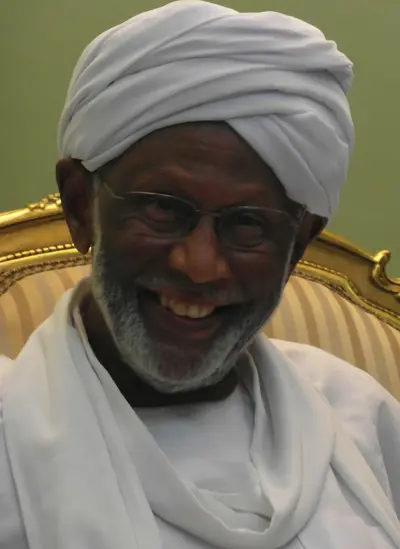
Hassan 'Abd Allah al Turabi was a Sudanese Islamist politician who was considered "the true architect" of 1989 coup that brought Omar Al-Bashir to power. He has been called "one of the most influential figures in modern Sudanese politics", and a "longtime hard-line ideological leader". He was instrumental in institutionalizing sharia (Islamic law) in the northern part of the country and was frequently imprisoned in Sudan, but these "periods of detention" were "interspersed with periods of high political office".
