Angus Deaton Quotes
The very wealthy have little need for state-provided education or health care... They have even less reason to support health insurance for everyone or to worry about the low quality of public schools that plagues much of the country.
Deaton, Angus. The Great Escape: Health, Wealth, and the Origins of Inequality. Princeton University Press, 2013.


This was written in 1933 one of the worst years of the Great Depression. Actualy many upper middle calss and rich people were ruined themselves by the Great Depression, but at the same time the ultra rich were living in a "gildd age" and reveled ostentatiously.

The same greatest issue was still before the people a century later. See {633217} , {635104} & {630538}.


The “competition of the poor included the political and social activism competition.”


Alabama. Mississippi and the other states of the South have from the inception of the nation had a much poorer educational system (often no system at all). Even when Jim Crow discrimination was rampant in the South, the white schools were very poor and the Black schools terrible. At the end of the 20th century after integration, there were more serious attempts to improve education in the South and progress is being made to reach parity with the rest of the country. However, there is still in many Southern school boards hostility to science and other aspects of modern education and Southern states tend to censor school texts and library books this weakening the educational system. But progress is being made.

The Supreme Court had ruled that there could be no limits placed on the amount of money that could be spent by a rich company or person to campaign for a candidate. It would deny them their right to freedom of speech. That was the context of Hollings’ remark.


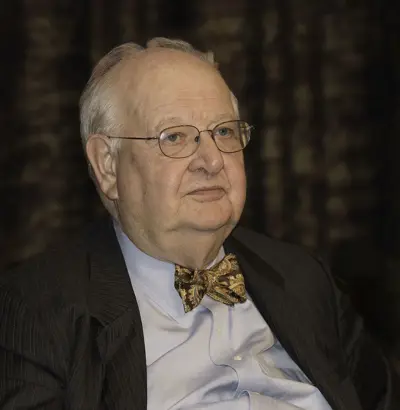
Sir Angus Stewart Deaton FBA is a British-American economist and academic. Deaton is currently a Senior Scholar and the Dwight D. Eisenhower Professor of Economics and International Affairs Emeritus at the Princeton School of Public and International Affairs and the Economics Department at Princeton University. His research focuses primarily on poverty, inequality, health, wellbeing, and economic development.
