Edward Abbey Quotes
The very poor are strictly materialistic. It takes money to be a mystic.
Abbey, Edward. A Voice Crying in the Wilderness (Vox Clamantis in Deserto). St. Martin's Press, 1989.


This view that the more people a country has, the richer it is, has gone hand in hand with the notion that a large population will assure a nation of extensive military prowess. However, both of these are now known to be false. The most heavily populated nations are among the poorest, and military prowess is more a function of the training of troops and the modern tools and weapons. Tiny Israel has demonstrated that many times since its origin. It has been attacked over and over by several nations at a time. Despite the fact that Israel was vastly outnumbered by enemy troops and weapons like tanks and planes, Israel has repeatedly demolished the more populous enemies. The world, observing this, no longer emphasizes trying to build a large manpower pool as it does not help militarily and it makes full employment very difficult.

In 1877 Wasburn was dropped from the List of Ministers by the Unitarian Church. He had become quite atheistic.

The States sold bonds to finance the Revolutionary War. Some states had better prospects for redeeming their bonds than others. Georgia, South Carolina and North Carolina in particular had poorer prospects than most and their bonds were selling at about 25 cents on the dollar. Alexander Hamilton, then the Secretary of the Treasury, wanted the new Federal government to assume the state’s war debt and pay off the bonds. He made his proposal for how he would accomplish this on January 14, 1790. He delivered his report and proposal to Congress “Report on the Public Credit”. As soon as Hamilton’s proposal was read in Congress, sophisticated speculators set off for the Southern States to buy up as many bonds as they could before the owners found out that a Federal bail-out was under serious consideration. They could easily double, triple or even quadruple their money. To Jackson this was gross immorality. Other representatives had a different point of view. See {619928} & {619929}.


America’s first political economist


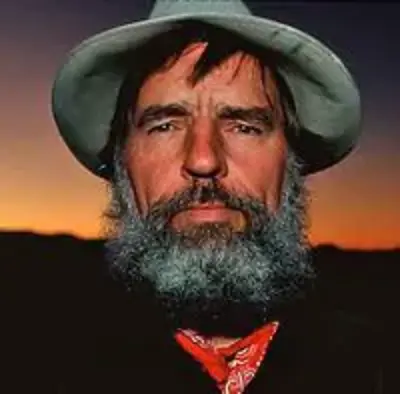
Edward Paul Abbey was an American author and essayist noted for his advocacy of environmental issues and criticism of public land policies. His best-known works include Desert Solitaire, a non-fiction autobiographical account of his time as a park ranger at Arches National Park considered to be an iconic work of nature writing and a staple of early environmentalist writing; the novel The Monkey Wrench Gang, which has been cited as an inspiration by environmentalists and groups defending nature by various means, also called eco-warriors; his novel Hayduke Lives; and his essay collections Down the River (with Henry Thoreau & Other Friends) (1982) and One Life at a Time, Please (1988).
