George Templeton Strong Quotes
The Tribune and other papers commend him to popular favor as having had but six months’ schooling in his whole life; and because he cut a great many rails, and worked on a flatboat in early youth; all which is somehow presumptive evidence of his statesmanship.
Strong is referring to the popular support of Abraham Lincoln’s candidacy in Western states.
George Templeton Strong, 1820-1875, New York Sanitary Commission, Diary, May 19, 1860
Sourced by: Eigen's Political and Historical Quotations

This is a wonderful contemporaneous assessment of Abraham Lincoln in his second year of his Presidency by America’s then greatest writer. He had met with Lincoln in the midst of the war and his first few lines reflect on that interview, given Lincoln’s great responsibilities and burden.

He was executed for rebellion at age 29. However, a number of his followers went on to leadership positions in the reforms that followed.


It was a 3-way race where the right wing of the Republican Party had stacked the deck so that Taft would be selected the nominee despite the greater popularity of TR who then decided to run as a 3rd party candidate. He beat the Republican nominee and incumbent President Taft soundly and the two of them together got many more votes than Wilson but Wilson had the most votes with only 42 percent. He got the loyal Democrat votes but lost the independents to Roosevelt who in turn lost the conservative Republicans to Taft. Wilson had the mathematics which made up for his personal weaknesses. What is very interesting about this quotation is that Wilson thought of himself as an intellectual as opposed to TR, but in reality Roosevelt was not only also an intellectual but the only President who was a world class scientists.


Ronald Reagan was then very successful in politics and a master of television.


This quotation illustrates an interesting phenomenon in American Presidential Politics. There have been Democratic Presidents (FDR and Obama are the most glaring examples) for whom there was vituperative hatred and derision from the conservative Republicans who would frequently refer to them as Socialists and would believe that they were trying to lead the country on the path to socialism. The Presidents always stated that they were opposed to socialism, but to little avail with their conservative haters. But the socialists of the times and even the left wing of the Democratic Party not only did not see them as socialists, but were not very supportive or complementary of their skills and capabilities. Roosevelt reveled in the situation and “welcomed: their hate. Obama was more of a public centrist who tried to avoid the president getting involved in the extreme partisanship of the day.

Harding was certainly ordinary, but he was not, in the opinion of most historians, a very good president.


Henry, who most people remember for his 5 wives, was actually a very learned man, who wrote prose, poetry and music. He actually brought non-English learned men to his court if they had intellectual or cultural views. In addition, he was an excellent athlete and brought active sports to England.
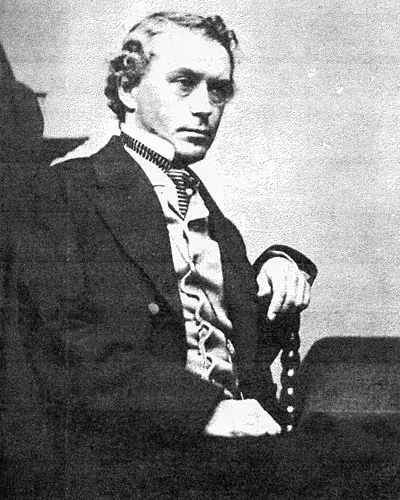
George Templeton Strong was an American lawyer, musician and diarist. His 2,250-page diary, discovered in the 1930s, provides a striking personal account of life in the 19th century, especially during the events of the American Civil War. It covers 1835 to 1875. The historian Paula Baker described him as "perhaps the northern equivalent of South Carolina's Mary Chesnut: quotable, opinionated, and a careful follower of events." He was a well-placed civic leader who was very well known in New York City. He served with distinction on the United States Sanitary Commission during the Civil War. But he never occupied top positions and had no special influence.
