William Cobbett Quotes
The tendency of taxation is to create a class of persons who do not labor, to take from those who do labor the produce of that labor, and to give it to those who do not labor.
Cobbett, William. Paper Against Gold and Glory Against Prosperity. J. M'Creery, 1815, p. 33.


Reacting to proposals to reduce the capital gains tax:

The nation rejected the flat tax that was favored by conservatives in the 1930s. However, in the Republican Presidential Primary Campaign of 2000, candidate Steve Forbes made the flat tax a centerpoint of his campaign. He lost badly, but the idea caught on amongst some conservative Republicans, and has had some support since.


Comment made in the Congressional Congress debates in 1787. This precedes individual taxation. In the debate, Wilson felt state taxation “should accord with the number of freemen” as “it is strange that annexing the name of ‘State’ to ten thousand men, should give them an equal right with forty thousand.”


Two decades later, in 2011, the fact that the very wealthy often paid tax at a much lower rate than the middle class and even some working poor became a major political issue.


He was one of the richest men in America, who thought that the tax burden on the very wealthy was too low given the needs of the nation and the ability of the wealty to pay..

The tax rates on income from working is much higher than on income generated from money which is invested. The reason for this is that the government wants economic growth and lowering the tax rate on investment profits will produce more investment which theoretically creates more jobs and strengthens the economy. However, most workers have no choice about whether they have to work. Lowering their tax rate will not induce them to work more. This not only produces a patently unfair burden on the worker compared to people who have capital to invest—usually among the wealthiest Americans. Another problem is that there are many forms of investment that does not produce any benefit for the United States. Many people invest in overseas banks, non American companies. These we tax at a low rate and all the benefits of the investment go to the foreign country.

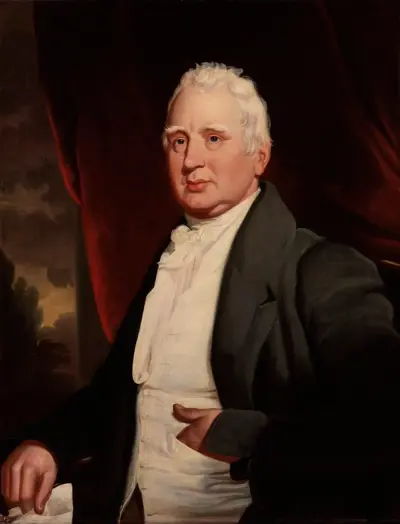
William Cobbett was an English pamphleteer, journalist, Member of Parliament and farmer born in Farnham, Surrey, one of a popular agrarian faction seeking to reform Parliament, abolish "rotten boroughs", restrain wanton foreign activity and increase wages, to promote domestic peace and ease poverty among farm labourers and smallholders. He backed lower taxes, saving, reversing enclosures of commons and resisting the gold standard of 1821. He sought an end to borough-mongers, sinecurists and "tax-eaters" (overpaid and corrupt bureaucrats, public servants and stockbrokers), and dismissed British Jews in a typecast by the same token. Early in life he was a soldier and devotee of king and country, but later pushed for a radicalism that helped to produce the Reform Act 1832 and gain him one of two seats in Parliament for the newly enfranchised borough of Oldham. He urged Catholic emancipation. He saw British agriculture and other economic output geographically. His polemics cover subjects from political reform to religion. His best known book is Rural Rides (1830, still in print). He argued against Malthusianism that economic betterment could support global population growth.
