Edgar Lee Masters Quotes
The spiritual kinship between Lincoln and Whitman was founded upon their Americanism, their essential Westernism. Whitman had grown up without much formal education; Lincoln had scarcely any education. One had become the notable poet of the day; one the orator of the Gettsyburg Address. It was inevitable that Whitman as a poet should turn with a feeling of kinship to Lincoln, and even without any association or contact feel that Lincoln was his.
Masters, Edgar Lee. Whitman. Charles Scribner's Sons, 1937.


He was referring to the entrepreneurial style and mercantile capitalism which most historians believe that the Jews developed originally and which led to the rapid initial development of the United States. He was not referring to the Jewish people who came to America. The historical Jewish development of much of modern capitalism and business, ironically, was the consequence of Jews in most of Europe not being allowed to own land or practice any of the professions. So the best of the Jewish talent was directed to trading, merchandizing and banking and they developed many of the basic capitalistic tools of today such as double entry bookkeeping.


This was written by a French Journalist who had been assigned to America for 7 years when he wrote this in 1939. WWII was just breaking out in Europe. President Franklin Delano Roosevelt was in his 3rd term of office (of 4) and since George Washington was the most popular American President, yet he had strong conservative critics and enemies.


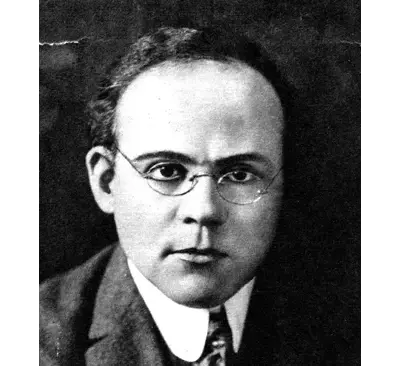
Edgar Lee Masters was an American attorney, poet, biographer, and dramatist. He is the author of Spoon River Anthology, The New Star Chamber and Other Essays, Songs and Satires, The Great Valley, The Serpent in the Wilderness, An Obscure Tale, The Spleen, Mark Twain: A Portrait, Lincoln: The Man, and Illinois Poems. In all, Masters published twelve plays, twenty-one books of poetry, six novels and six biographies, including those of Abraham Lincoln, Mark Twain, Vachel Lindsay, and Walt Whitman.
