Sherwin B. Nuland Quotes
The Scientific Revolution, that remarkable transformation of European thought that occurred between approximately 1550 and 1700, brought with it an ascendancy of the experimental method and the refusal to believe any explanation of natural phenomena that could not be proven to the satisfaction of the empirical observer.
Nuland, Sherwin B. Doctors: The Biography of Medicine. Knopf, 1988.


Much of modern science involves non-intuitive concepts that can rarely if ever be discovered using common sense. It was hard enough for most people to accept the notion of an infinite number, but now we know that there are many infinite numbers and they are all different form one another. Darwinian thinking was contrary to most learned thought of the day, and even much public opinion today. Even Albert Einstein had to struggle to comprehend the findings of Quantum Mechanics which are very non intuitive—one object can be in two different places at the same time. Meanwhile, most people are totally unaware that the world around is does not correspond to normal human intuition and common sense. Yet these are the same and only tools that we continue to use in making decisions about our society. And the fundamental truths of yesterday, the foundation of past thinking and glory, are the naïve simplifications and errors of today and become the superstitions of tomorrow.


For many people, especially, bright and educated people, science has been an escape from unstable, political situations.


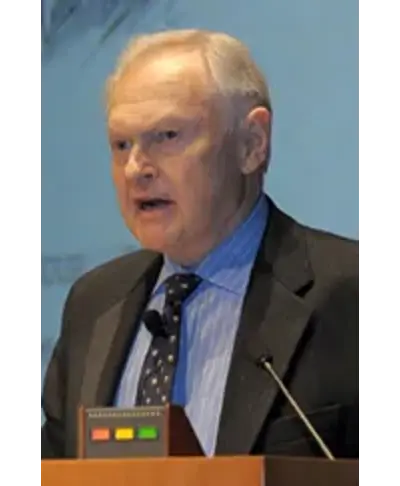
Sherwin Bernard Nuland (born Shepsel Ber Nudelman), December 8, 1930 – March 3, 2014, was an American surgeon and writer who taught bioethics, history of medicine, and medicine at the Yale School of Medicine, and occasionally bioethics and history of medicine at Yale College. His 1994 book How We Die: Reflections on Life's Final Chapter was a New York Times Best Seller and won the National Book Award for Nonfiction, as well as being a finalist for the Pulitzer Prize.
