Lord Byron Quotes
The Roman Catholics must know as well as we do that 'Popery' when encouraged by government has always been dangerous to the liberties of the people.
Byron, George Gordon. The Works of Lord Byron: Letters and Journals. Edited by Rowland E. Prothero, vol. 2, John Murray, 1898, p. 434.


The motion to go on record against the Blue Law the closing of the World’s Fair on Sunday was supported by Elizabeth Cady Stanton and a few other leaders but it was too controversial to carry.


New Ross was under siege by Cromwell and his English Parliamentarian troops. After two days, the town tried to negotiate terms of surrender and one of the main things they asked for was freedom of religion to practice Roman Catholicism. This famous response set the stage for religious bigotry over the next years. Cromwell’s reasons for not allowing Catholicism to be practiced was not only one of religious zeal. At the time, the Roman Catholic Church was a major geopolitical power under a Pope who commonly supported or even dispatched troops for geopolitical and religious ends. The Vatican was particularly resentful of England for separating from the Church and asserting that the King of England was the head of the Church and not the Pope. Therefore Cromwell and many Englishmen had to deal with the reality that every practicing Catholic in the realm was a potential spy, traitor, and/or rebel. This fear of control of countries by the Pope strongly affected America, and was responsible for the defeat of the first Catholic Presidential Candidate, Al Smith. It was also a major factor in the election of John F. Kennedy so he dealt with it head on.


Williams was the first theologian who not only advocated religious toleration but argued that Christianity demanded it and the separation of church and state.


He is a Greek Orthodox Christian, and he correctly observes that the Islamic world was considerably more tolerant than the Christian until the 18th century when Islam had become less tolerant in the Middle East while the Christians were modernizing and going through a cultural and intellectual enlightenment and societal modernization while the Muslims, became less tolerant than they were in earlier years leading to the modern situation.


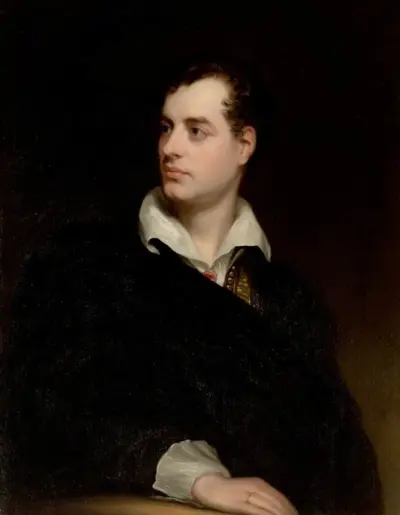
George Gordon Byron, 6th Baron Byron, FRS known simply as Lord Byron, was an English peer, who was a poet and politician. He was one of the leading figures of the Romantic movement and is regarded as one of the greatest English poets. He remains widely read and influential. Among his best-known works are the lengthy narrative poems Don Juan and Childe Harold's Pilgrimage; many of his shorter lyrics in Hebrew Melodies also became popular.
