Caleb Cushing Quotes
The right of petition, I have said, was not conferred on the People by the Constitution, but was a pre-existing right, reserved by the People out of the grants of power made to Congress.
Cushing, Caleb. Speech of Mr. Cushing, of Massachusetts, on the Right of Petition, as Connected with Petitions for the Abolition of Slavery and the Slave Trade in the District of Columbia: In the House of Representatives, January 25, 1836. Gales and Seaton, 1836, p. 7.


Chief legal officer of a Dutch town. He wanted to have a plebiscite in each town on major issues before the assembly so as to instruct the representative as to how to vote. The graphic is a painting of Adriaan van Zeebergh and his board of the Teylers Stichting.


In 1974 the Senate Foreign Relations Committee was investigating the wiretapping of American citizens. An FBI witness, Bernard Wells, testified that the wiretaps had demonstrated no disloyalty but they had identified some "loose talk:"


Despite Ziglar’s and other officials pointing out the illegality, illegal sweeps and arrests were made without warrants or constitutional requirements.
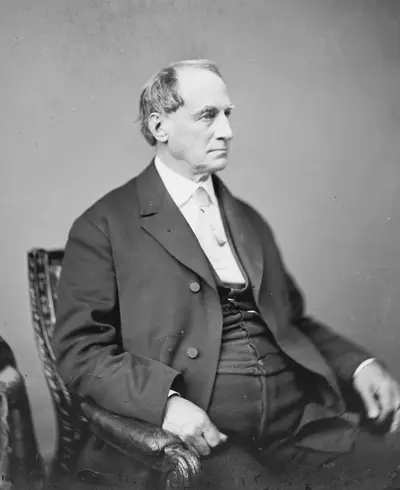
Caleb Cushing was an American Democratic politician and diplomat who served as a Congressman from Massachusetts and Attorney General under President Franklin Pierce. He was an eager proponent of territorial and commercial expansion, especially regarding the acquisition of Texas, Oregon and Cuba. He believed that enlarging the American sphere would fulfill "the great destiny reserved for this exemplar American Republic." Cushing secured the first American treaty with China, the Treaty of Wangxia of 1844; it gave American merchants trading rights in five Chinese ports. After the Civil War, Cushing negotiated a treaty with Colombia to give the United States a right-of-way for a trans-oceanic Canal. He helped obtain a favorable settlement of the Alabama Claims, and as the ambassador to Spain in 1870s defused the troublesome Virginius Affair.
