Karl Kautsky Quotes
The revolt against the Papacy was essentially a struggle between exploiters and exploited, not a struggle over mere ecclesiastical dogmas or vague slogans, such as a struggle between “authority” and “individualism.” The Popes hastened their own destruction by becoming increasingly contemptible. This is the fate of every ruling class that has become obsolete and is approaching extinction. Their functions dwindle as their wealth grows, and nothing remains for them to do but dissipate the proceeds of their extortions.
Karl Kautsky, 1854-1938, Czech/German Journalist, Publisher & Editor, Founder of Die Neue Zeit, Thomas More and his Utopia, 1888
Sourced by: Eigen's Political and Historical Quotations


In 1927 there was a Peasant Uprising in the Hunan Province of China. Young Mau went there and wrote a report. Corruption has plagued China for millennia. As can be seen by this quotation, Mao thought that a “people’s revolution” would end corruption and despite capital punishment for corruption under the Communist government, corruption still thrived. By the 21st century corruption was common among local Communist Party Officials despite national party and government attempts to obliterate it.


Kaltenbrunner was one of the major war criminals declared guilty at the Nuremberg Trials and hanged.


Just before the outbreak of hostilities of WWI. The German Social Democratic Party was a minority party in Germany and the majority was very anxious to go to war.

Ceremonialists refer to Roman Catholics.


The United States money was then on the Gold Standard. The country was growing and needed more money in circulation. But most of the gold that might be available was in England and English bankers could control much of the U. S. economy. The Populists and the Democrats wanted us to use silver to back U. S. money as there was plenty of silver in the United States. The Republicans would not relent and depression was upon the country. A half century later, it would be Republican President Richard M. Nixon, who took the United States off the gold standard. Lease was far ahead of her time.


The term “rugged individualism” was used at the time be very conservatives and the very wealthy to describe business leladers with words that had very good public connotations. They argued that it would be undesirable to curtail their individualism that was so important by any government regulations or laws that would limit what the business leaders could do. However, the reality was that these very successful and powerful “rugged individualists” had regimented most everyone else—employees, consumers, and small businessmen who might sell them services or products. To Tugwell, if the wealthy and powerful few had no restrictions on their individualism, there would be precious little individualism for most of society. He sought a balance of regulating the individualism and prerogatives of the few somewhat in order to allow the vast majority of people to be able to have individuality as well.


The United States was governing the Philippines after the Spanish American war. Most Filipinos were Roman Catholic and before the Americans even took over there were a large number of Catholic priests who were sexually active in different ways. Many had housekeepers/concubines, others had relations with women who they learned were vulnerable in the confessional. Still others were homosexuals and preferred young boys. Americans were much more prudish than many other countries where lecherous men of the cloth had a long history. The American authorities simply removed these priests not realizing that there was still with many countries laws and traditions that left the disciplining of clergy, even for criminal matters, to the religious authorities. The Catholic Church was then very defensive about sexually predatory priests. The Vatican made many protestations that the U. S. Government were interfering with the prerogative of the church to run its own religious affairs. American Catholics and Catholic leaders also complained about the religious “interference”. Roosevelt knew full well that the Church had done little or nothing about the Filipino lecherous priests before the Americans took over, and he had no confidence that they would do so in the future. And he was adamant that religious officials should be subject to the civil law and civil authorities for behavior of all citizens with no exemptions for clergy. When the Catholic church realized the poor PR that they were getting from the worst priestly offenders, it tended to back off overt confrontation, and came to a diplomatic agreement with America over the issue. Most countries resolved this issue the way Roosevelt and the Americans did. Clergy were subject to civil law in all things.

Generally, the robbery he was referring to was white color crime, profits from monopolies, profits made by deviating from laws and regulations, and most frequently by methods that most people think should be illegal and certainly are immoral, but the wealthy have persuaded the Congress and Executive to make many of these thinks legal.
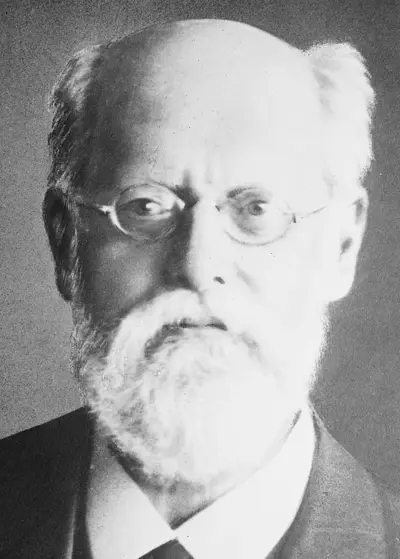
Karl Johann Kautsky was a Czech-Austrian philosopher, journalist, and Marxist theoretician. Kautsky was one of the most authoritative promulgators of orthodox Marxism after the death of Friedrich Engels in 1895 until the outbreak of World War I in 1914. He was the most important socialist theorist during the years of the Second International. He founded the socialist journal Neue Zeit.
