William Graham Sumner Quotes
The real danger of democracy is, that the classes which have the power under it will assume all the rights and reject all the duties-that is, that they will use the political power to plunder those-who-have.
Sumner, William Graham. What Social Classes Owe to Each Other. Harper & Brothers, 1883, p. 33.


In 1877 Wasburn was dropped from the List of Ministers by the Unitarian Church. He had become quite atheistic.

This quotation is very important because it illustrates in the first of our great national political debates, the same views held by extreme, right wing anti-government, and Tea Party adherents regarding government in general and taxation in particular. Singletary turned out to have been absolutely right about the inadequacy of import duties as a federal revenue source although it took many decades and a changing world to make that come to pass. Note also that there was then, as there is today among the extreme right, a deep suspicion and antipathy toward intellectuals—“men of learning” as well as the elites. Some saw the Constitution as a plot of the elite to capture control of the government to the exclusion of the poor and average man. That has always been a problem but these roots are deep in American history. See {634235} and {634238} for more of his arguments at the Ratification Convention.


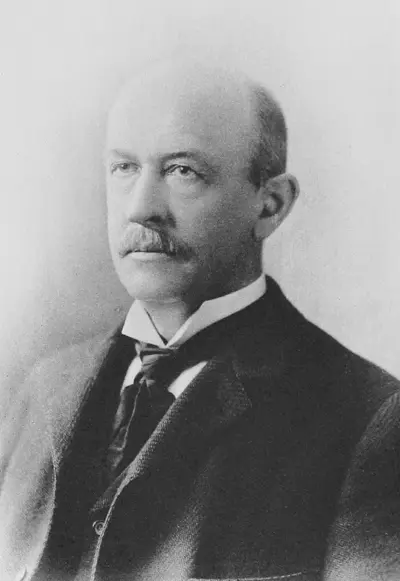
William Graham Sumner was a classical liberal American social scientist. He taught social sciences at Yale, where he held the nation's first professorship in sociology. He was one of the most influential teachers at Yale or any other major school. Sumner wrote widely within the social sciences, with numerous books and essays on American history, economic history, political theory, sociology, and anthropology. He supported laissez-faire economics, free markets, and the gold standard. He adopted the term "ethnocentrism" to identify the roots of imperialism, which he strongly opposed, and as a spokesman against it he was in favor of the "forgotten man" of the middle class, a term he coined. He had a long-term influence on conservatism in the United States.
