William Godwin Quotes
The proper method for hastening the decay of error, is not, by brute force, or by regulation which is one of the classes of force, to endeavour to reduce men to intellectual uniformity; but on the contrary by teaching every man to think for himself.
Godwin, William. An Enquiry Concerning Political Justice, and Its Influence on General Virtue and Happiness. Vol. 2, G. G. J. and J. Robinson, 1793, p. 597.


The loyalty and sometimes hypocrisy that is often called for by political parties tends to be offensive to people of serious thought and intellect. However, America has developed two major political parties which while from time to time tend to lock-step obedience, over time tolerate wide diversity and there are few areas in which there can be a party loyalty test. In nations where there are many parties each can be very well-defined and narrow, while if essentially only two, they must have broad tents in order to win. Thinkers are more comfortable in that kind of party.

Spinoza was one of the most feared intellectuals in human history—feared that is by the established power structures. He is the only known person who was excommunicated by the Catholics, the Jews and the Muslims—all were forbidden to read his works. He was the enemy of authority and advocated personal reason as the guide for men.


There are few Islamic leaders who were so forthright about freedom of thought vis a vis religion.


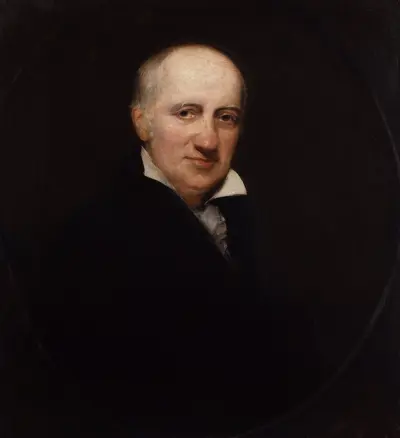
William Godwin was an English journalist, political philosopher and novelist. He is considered one of the first exponents of utilitarianism and the first modern proponent of anarchism. Godwin is most famous for two books that he published within the space of a year: An Enquiry Concerning Political Justice, an attack on political institutions, and Things as They Are; or, The Adventures of Caleb Williams, an early mystery novel which attacks aristocratic privilege. Based on the success of both, Godwin featured prominently in the radical circles of London in the 1790s. He wrote prolifically in the genres of novels, history and demography throughout his life.
