Stokely Carmichael Quotes
The position of women in SNCC is prone!
SNCC had been formed to promote equality, but race and class were the issues, not gender. Many of the women left SNCC and proceeded separately to start a women’s movement.
Stokely Carmichael [Kwame Toure], 1942-1998, Student Non-Violent Coordinating Committee, Response to women in the organization who had “joined the revolution” but were only given “women’s work,” 1968
Sourced by: Eigen's Political and Historical Quotations

At the time and for the next decade she was one of the few world leaders who made women’s equality and rights a major priority. But slowly American and European women and many men began to give higher priority to using foreign policy and foreign aid. Then women from Asia and Africa began to take up the issue and in the early 21st century even some women in the Islamic nations began to fight for women’s rights. Mrs. Roosevelt. However, was the first modern major and high visibility politician to make women’s rights a major international and national issue.


Given the time, this was an amazing demand. Fuller preceded all the more famous American feminists and was an inspiration to them.

Some men in the audience hissed as she took the podium.

The speaking to which she was referring was Christian Religious preaching by women. At the time it was considered by most Christians to be sacrilegious for women to preach. This came down from the orthodox Jewish tradition, and there are several passages in the New Testament where the Apostles, who were Jews themselves were echoing the religious tradition. This then took on a meaning that went beyond tradition as in Judaism. Margaret Fox wrote this essay which was a completely theological defense of a woman’s right – indeed obligation—to preach. Theologically, there are many Christian churches for whom her argument would be too radical—even in modern times. However, in the middle of the 17th century to most male clerics, this was so unfathomable that they did not even deign to refute her theological arguments. Meanwhile, the Quakers began to accept women in theological positions of influence—for ahead of most other Christian and Jewish sects. See {619836} and {619837} for quotations from the essay itself.


Despite this pronouncement which kept Caliphs from being female, modern Islamic states (Pakistan, Indonesia) have had female Presidents.


At the time, the entertainment industry, while it was open to female entertainers and writers, has been male dominated for years. Very few women were directors, producers, or executives who controlled power or money.

First female presidential candidate & first divorcee to run for that office


She was the first presidential candidate's wife to admit such a radical position.


She was the First Lady, who in many ways was also one of the nation’s leading feminists. Betty Ford, Barbara Bush, and Hillary Clinton were also First Ladies who supported key feminist position but ER was 30 years ahead of them—a time when conservatives and sexists viewed her as a dangerous radical. For example, see {585211}.

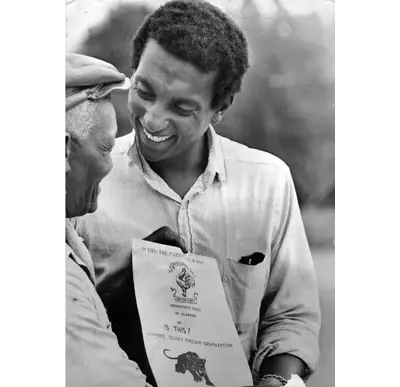
Kwame Ture was a prominent organizer in the civil rights movement in the United States and the global Pan-African movement. Born in Trinidad, he grew up in the United States from the age of 11 and became an activist while attending the Bronx High School of Science. He was a key leader in the development of the Black Power movement, first while leading the Student Nonviolent Coordinating Committee (SNCC), then as the "Honorary Prime Minister" of the Black Panther Party (BPP), and last as a leader of the All-African People's Revolutionary Party (A-APRP).
