Marcia Angell Quotes
The pharmaceutical industry isn't the only place where there's waste and inefficiency and profiteering. That happens in much of the rest of the health care industry.
Angell, Marcia. Interview. Frontline: The Other Drug War, PBS, 19 June 2003.


The immediate trigger for this statement was the Mylan Company’s price increase of 500 percent for Epi-pens which people—frequently children—needed to carry to contact a bad allergic reaction that would other wise put them into anaphylactic shock which could be fatal. One of the reasons the company gave for the increase was that their marketing costs were very high. The practice of paying physicians to use a drug and then give testimonials and pitch the drug had long been controversial, but in 2016 the public learned that the practice was much more widespread than anyone had known. Making the situation worse was the fact that physicians would prescribe the drug for their patients and had no obligation to tell the patient or his/her family that he was being paid by the drug company. The Congress held hearings but did nothing at the time.


Unlike most forms of insurance virtually everyone will have one or more claims and collect in his or her lifetime. Many of use will never have an automobile crash and collect on our insurance policy, but health is different in that we all change health status from well to ill at times and if we are fortunate we return to a state of wellness. But as Eigen observes, most of us who are tell are only temporarily well, With time our state will change to ill and if we are not very fortunate we will never use our health insurance as we will be dead. There is almost no way to age in a modern society without needing health care or funeral services, That is the consequence of the normal process of aging. So with health insurance schemes we, in effect, pass money from the living well to the living ill. So if health care costs increase fastr than inflation, which it has almost always done in the last half century, the temporarily well will be paying more and more. The only way to break that cycle is to somehow limit the cost increases of health care to that of the inflationary increase. Eigen has argued that most of us focus on the wrong problem--the details of the way the well pay for the ill, when the only soltuion is to reduce the rate of increases of health care costs. And there are only 2 ways to do that: Reduce the compensation for all the health care actors--physicians, nurses, other staff, hospitals, and manufacturers of medical equipment, supplies and expecially pharmaceuticals which have been increasing at the fastest rate of all or wer privide more and more effective prevention.

Although extremely conservative, Paul was opposed to giving corporations a cut of economic activity just to say that it was private and not public of government run. The corporate HMOs and managed care organizations claimed that they are performing a quality control and money saving service, but there were non profit organizations that performed the functions just as well and did not add on a profit fee for themselves,

Others while conceding that corporate involvement accounted for the extremely high costs of American pharmaceuticals and medical devices and equipment, argue that the companies have produced many innovations in addition to the research the government has paid for, and would not agree with Washington that the involvement was all “disastrous.”


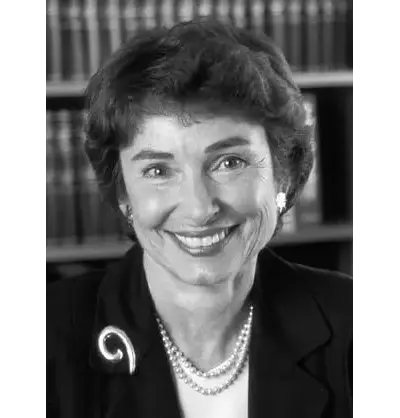
Marcia Angell is an American physician, author, and the first woman to serve as editor-in-chief of the New England Journal of Medicine. She is currently a Senior Lecturer in the Department of Global Health and Social Medicine at Harvard Medical School in Boston, Massachusetts.
